
Prison staff lack training in disability management, grievance redressal mechanisms are ineffective, and rehabilitation programmes rarely include disabled inmates.
Dr Muluvesalu Keyho
Assistant Professor (Law)
Pasighat Campus, RRU

1. Introduction
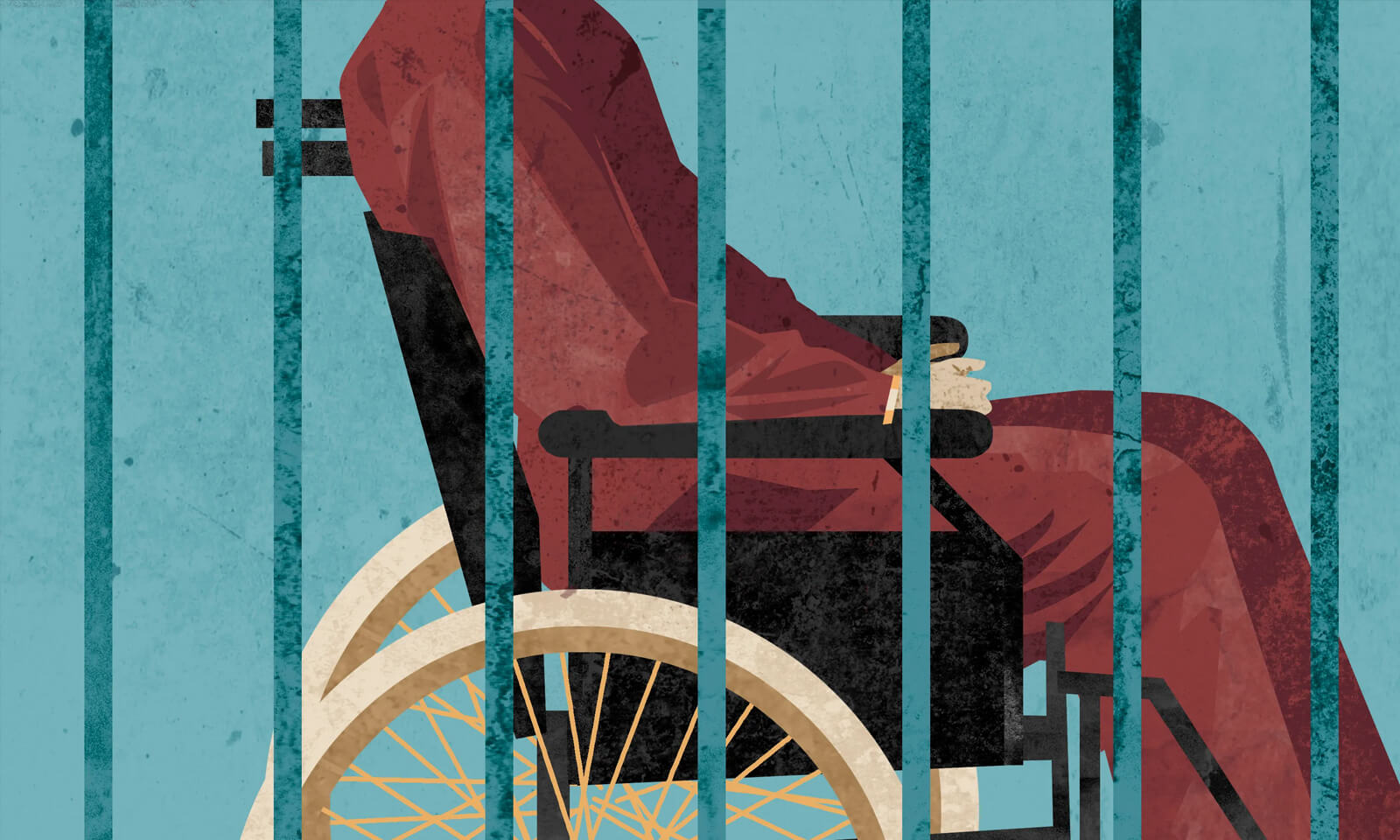
Prisons are often described as a “state within a state,” reflecting the government’s control over incarcerated lives. While all prisoners face rights restrictions, disabled inmates suffer disproportionately due to inaccessible infrastructure, absence of trained staff, and neglect of their needs. Though the Constitution guarantees equality and dignity, prison realities diverge sharply. Dhanda notes that Indian disability law remains welfare-oriented with limited custodial focus.¹ Rao highlights that overcrowding worsens neglect of mental illness and physical impairment.² Bhandari and Jain report the absence of assistive devices, forcing inmates to rely on others.³ The NHRC–NIMHANS Report estimates 6–8% of prisoners live with disabilities, yet prison manuals rarely address their care.⁴ This article examines the overlooked rights of prisoners with disabilities in India, who face dual discrimination from incarceration and disability. The study aims to evaluate whether constitutional, statutory, and international standards—such as the Constitution of India, Nelson Mandela Rules (2015), Model Prison Manual (2016), and Model Prisons and Correctional Services Act (2023)—are effectively implemented in custodial settings. Drawing on secondary data, case studies, and judicial pronouncements, the findings reveal persistent systemic neglect and inadequate facilities for differently abled inmates. Despite progressive legal safeguards, the research finds that a wide implementation gap remains the central barrier to protecting their rights. Overall, studies reveal a persistent gap between legal protections and practice.
2. Observations on Legal and Policy Framework
- Constitutional Protections: The Indian Constitution remains the cornerstone for prisoners’ rights. Article 14 ensures equality before the law, Article 21 protects the right to life and dignity, and Article 15 prohibits discrimination on grounds including disability, as interpreted. Article 41 obligates the state to make provisions for persons with disabilities. The Supreme Court has consistently expanded Article 21 to include humane prison conditions, as seen in Sunil Batra v. Delhi Administration (1978)⁵ and Sheela Barse v. State of Maharashtra (1983).⁶
- Nelson Mandela Rules (2015): Adopted by the United Nations, the Mandela Rules recognise the rights of prisoners with special needs. Rule 5(2) requires non-discrimination based on disability, while Rule 25 mandates the provision of reasonable accommodations and adequate healthcare. ⁷ These principles influence Indian prison policy and judicial interpretation.
- Model Prison Manual (2016): The Manual recommends barrier-free infrastructure, the provision of wheelchairs, crutches, hearing aids, and braille materials, as well as access to vocational training tailored to meet the needs of prisoners with disabilities.⁸
- Model Prisons and Correctional Services Act (2023)
For the first time, the Act expressly recognises disabled prisoners, requiring disability screening upon admission, the provision of assistive devices, and the provision of barrier-free facilities. Section 55(B) obligates authorities to ensure reasonable accommodation explicitly. ⁹
3. Case Study and Evidence of Human Rights Violations:
A significant study conducted by the NHRC and NIMHANS (2019) revealed disturbing accounts of neglect. In one central prison, a paraplegic inmate without a wheelchair was forced to crawl on the floor. Another visually impaired inmate had no access to braille books or an escort, effectively isolating him from education and recreation. These instances violated not only the Mandela Rules but also Article 21 of the Constitution and the Rights of Persons with Disabilities Act, 2016. Researchers concluded that the absence of facilities amounted to degrading treatment and highlighted the urgent need for reform.¹⁰
4. Judicial and Policy Developments:
Judicial pronouncements have played a crucial role in shaping the rights of prisoners. In Muruganantham v. State of Tamil Nadu (2025),¹¹ the Supreme Court directed states to provide assistive devices and barrier-free facilities for disabled prisoners, recognising neglect as a violation of Article 21. Earlier cases such as Sunil Batra (1978)⁵ and Sheela Barse (1983)⁶ laid the foundation for a rights-based approach to prison administration, emphasising that prisoners do not forfeit their fundamental rights.
Conclusion
India’s legal framework for disability rights in prisons is relatively comprehensive, yet implementation remains weak. Prison staff lack training in disability management, grievance redressal mechanisms are ineffective, and rehabilitation programmes rarely include disabled inmates. The absence of disaggregated data further renders them invisible in policy discourse. Such gaps risk constituting cruel, inhuman, or degrading treatment under domestic and international law. Although the Model Prisons Act (2023) signals progress, its success depends on political will, resources, and monitoring. Reforms should include disability audits, staff training, Disability Rights Officers, mandatory assistive devices, barrier-free infrastructure, and judicial oversight. Strengthening implementation is crucial to safeguard constitutional and international human rights standards.
References
- Amita Dhanda, Legal Framework for Persons with Disabilities in India (Economic and Political Weekly, Mumbai, 2008).
- Ministry of Home Affairs, Model Prison Manual (MHA, New Delhi, 2016).
- Ministry of Home Affairs, Model Prisons and Correctional Services Act (MHA, New Delhi, 2023).
- Muruganantham v. State of Tamil Nadu (2025) SCC Online SC 219.
- N. Rao, ‘Overcrowding and Neglect of Prisoners with Disabilities in India’ (2011) 3(2) Journal of Indian Law and Society 45.
- National Human Rights Commission and NIMHANS, Mental Health and Disability in Indian Prisons: Report (NHRC, New Delhi, 2019).
- NHRC and NIMHANS Report (n 4).
- R. Bhandari and S. Jain, ‘Disability and Incarceration in India: Rights and Realities’ (2016) 44(1) Indian Journal of Criminology 89.
- Sheela Barse v. State of Maharashtra (1983) 2 SCC 96.
- Sunil Batra v. Delhi Administration (1978) 4 SCC 494.
- United Nations, Standard Minimum Rules for the Treatment of Prisoners (Nelson Mandela Rules) (UN, New York, 2015).