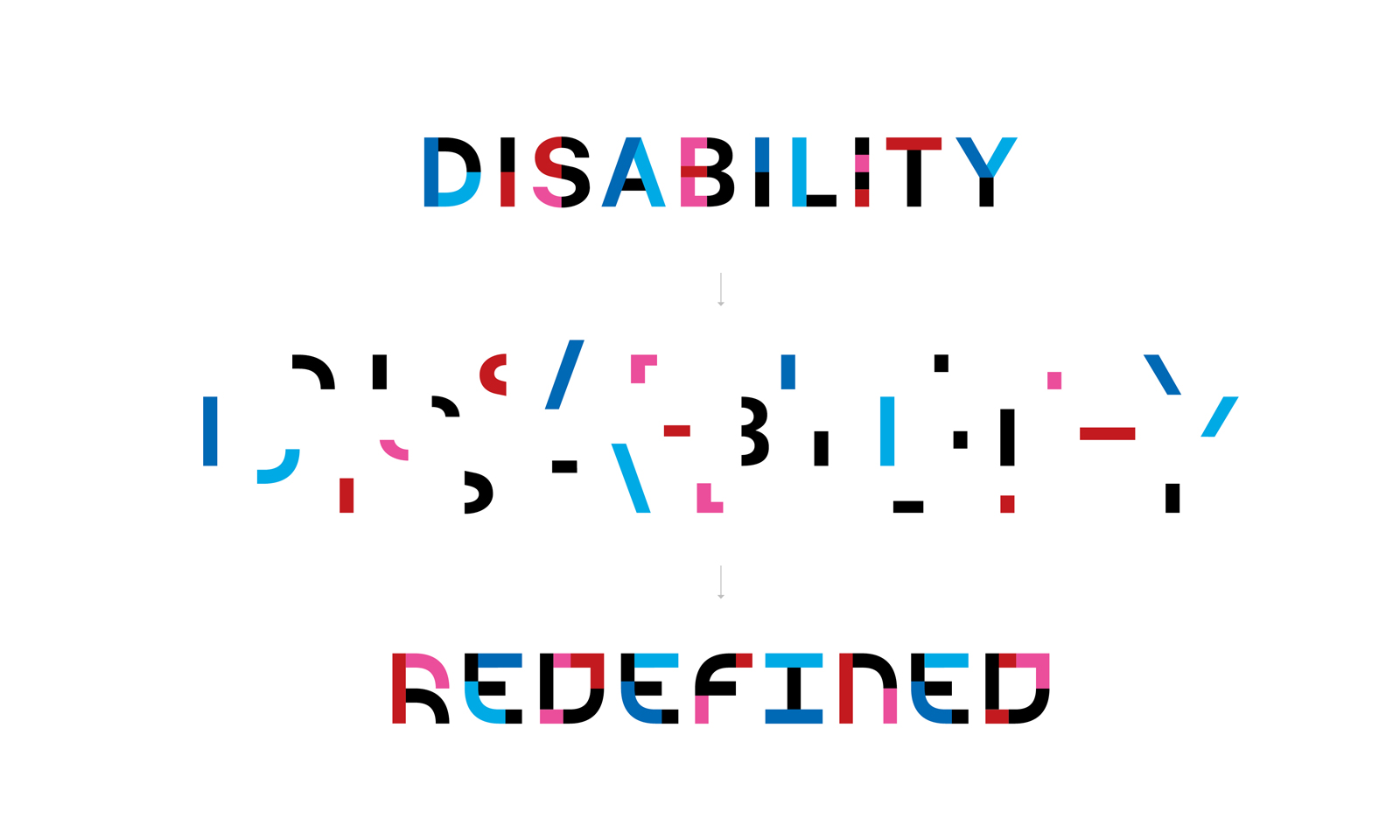
Redefining Disability: A Question of Aesthetics
Dr. Vivek Singh
Assistant Professor of English
Banaras Hindu University
It is often observed that bodies marked by differences are undervalued and frequently disregarded in our society. But this prompts a deeper and more fundamental question: how do we come to understand one body as different from another, when, in fact, all bodies are different from one another in some way?
The distinction arises not inherently from the body itself, but through the lens provided by institutions—especially the medical establishment—which has historically played a key role in defining what a “normal” body should look like and how it should function. Through this institutional gaze, an abstract and idealized notion of the “normal” body emerged, against which all other bodies are measured. This abstraction becomes a normative aesthetic, a standard that bodies are expected to conform to, regardless of their natural variance. Over the time, this idea of the “normal” body has continued to shift and evolve, becoming increasingly abstract, elusive, and yet more powerfully prescriptive. Paradoxically, even as the definition changes, it is rarely questioned or concretized. Instead, it functions as an invisible aesthetic ideal—one that disciplines bodies, renders many of them deviant, and reinforces the marginalization of those labeled as disabled.
Disability is not merely a medical or functional condition—it is also an aesthetic judgment shaped by norms, institutions, and cultural perceptions. To redefine disability, we must interrogate the aesthetic regimes that inform our understanding of bodies and challenge the abstract ideals that continue to govern what is seen as normal, valuable, and beautiful. Moreover, what is often overlooked in this discourse is the role of culture. Unfortunately, discussions around bodily norms and aesthetics frequently neglect cultural diversity, assuming a universal standard of beauty, ability, and form. Every culture has its own unique relationship with the body-shaped by local customs, spiritual beliefs, historical memory, and lived experiences. These cultural frameworks not only inform how bodies are perceived but also influence how pain, ability, and difference are understood.
In our globalized world, there is a growing tendency to hegemonize one cultural aesthetic over others—typically a Euro-American standard—while disregarding how such dominance might uproot the foundational values of other communities. The imposition of a singular aesthetic ideal, especially one rooted in Western biomedical norms, threatens to erase diverse bodily narratives, disabling not just individuals but entire ways of being. Tobin Siebers challenges traditional conceptions of beauty and bodily value. He argues that disability is not merely a medical diagnosis but a cultural and aesthetic experience—one that disrupts classical ideals of harmony, proportion, and symmetry. According to Siebers, disability aesthetics embraces the material reality of the disabled body, not as something to be corrected or hidden, but as something that carries its own expressive power and representational value.
Siebers urges us to reimagine aesthetic value beyond perfection and ideal form. Disability, in this context, becomes a source of artistic and philosophical insight—a way to critique dominant narratives about normalcy, independence, and bodily coherence. By recognizing the aesthetic contributions of disability, we are also recognizing the political potential of difference.To redefine disability, then, is not only to challenge medical or institutional norms but also to reframe the aesthetic imagination. It is to ask: What makes a body beautiful? Whose pain is legible? Whose form is valued, and why?
True inclusivity demands that we recognize how culture, aesthetics, and embodiment intersect in complex and often contested ways. It means making space for disabled bodies not inspite of their difference, but precisely because of it. It also means resisting the cultural erasure that occurs when one dominant vision of beauty or functionality overrides all others. Rethinking aesthetics through the lens of disability is not a marginal exercise—it is central to the broader project of justice, representation, and the democratization of human experience.
The discourse of disability in India cannot be fully understood without engaging with the aesthetics of modernity. Modernity—often associated with rationality, progress, hygiene, and technological advancement—has profoundly shaped how the body is conceptualized, disciplined, and represented. Within this paradigm, disability is not only rendered as a medical anomaly or a personal tragedy but as an aesthetic and civic failure—a deviation from the ideal of the productive, self-governing, able-bodied citizen imagined by the modern nation-state.
Modernity in India arrived through colonialism, which introduced not just Western medicine, architecture and institutions but also European aesthetic and bodily norms. The colonial project classified and catalogued Indian bodies along the lines of race, health, hygiene, and capability. It pathologized certain kinds of bodies—particularly those that were disabled, racialized and impoverished—as degenerate, unfit, or in need of being civilized. This classification laid the foundation for a modern aesthetic that equated health with beauty, ability with progress, and symmetry with normalcy. Disability, in contrast, was situated outside the aesthetic and moral framework of the modern. It became something to be hidden, corrected, or cared for—but never celebrated or seen as integral to the national body.
Post-independence India embraced modernity through the language of development. The new Indian citizen was expected to be productive, rational, mobile, and economically contributory. Within this developmental logic, disability became a form of aesthetic disruption—a symbol of inefficiency, dependency, and backwardness. The aesthetics of disability, in this era, were framed through charity advertisements, rehabilitation posters, and welfare schemes. These representations did not challenge the norm but reinforced it, casting disabled bodies as tragic, damaged, or in need of upliftment. Even today, with the rise of neoliberal policies, there is a renewed emphasis on the entrepreneurial, self-sufficient, technologically assisted disabled subject—one who “overcomes” disability to meet the demands of capitalist productivity. This reinforces the modern aesthetic ideal: the body must conform, perform, and be improved upon.
Urban India, as a spatial expression of modernity, is also a site of aesthetic exclusion. The city is built for speed, mobility, and visual pleasure, privileging the able-bodied flâneur. Disability becomes aesthetically inconvenient in these spaces. Ramps are added as afterthoughts; elevators remain locked; accessible toilets are either non-functional or non-existent. Here, aesthetics is not merely about beauty—it is about belongingness. The aesthetics of modern urban design in India often exclude the disabled subject not by intention alone, but by design. Accessibility, therefore, is not just a technical issue—it is an aesthetic and ethical demand.
Indian classical art forms—dance, sculpture, and literature—have long celebrated bodily grace, balance, and form, often excluding disabled bodies from aesthetic participation. However, contemporary movements are challenging this. Disabled artists, dancers, poets, and performers are reclaiming aesthetics by foregrounding the expressive possibilities of the disabled body. Drawing on Tobin Siebers’ idea of “disability aesthetics”, Indian disability activists and artists are reconfiguring how beauty, form, and value are understood. Siebers argues that disability aesthetics values the materiality of the disabled body—not despite its difference, but because of it. It challenges traditional ideals of coherence, unity, and proportion by embracing vulnerability, fragmentation, and asymmetry as aesthetic possibilities.
In India, this shift is visible in emerging spaces—disability theatre, inclusive fashion, memoirs, digital activism—where disabled bodies are not simply represented, but assert their own aesthetic regimes. This marks a powerful counter-narrative to the aesthetics of modernity: one that values lived experience, interdependence, and affect over cold perfection. To rethink disability in India through the lens of aesthetics is not simply a cultural exercise—it is a political imperative. Modernity, as both a historical condition and an aesthetic project, has marginalized disabled bodies by defining them in terms of lack. But in reclaiming aesthetics—from architecture to art, from performance to policy—disabled communities are not just asking to be seen; they are reshaping what it means to see, to feel, and to value.
By placing disability at the center of aesthetic inquiry, we open ourselves to a more inclusive, plural, and ethically responsive vision of modernity—one that resists hegemony and celebrates the beautiful complexity of human difference. In the Indian context, the shaping of disabled bodies through the discourse of aesthetics is deeply entangled with cultural, religious, and socio-political frameworks. Unlike in the West—where aesthetics is often tied to classical ideals of symmetry, beauty, and functionality—in India, aesthetics operates through a broader terrain of mythology, morality, caste, purity, and bodily discipline. These cultural matrices have a powerful influence on how disability is perceived, represented, and lived.
In Indian religious and mythological traditions, bodily difference is often loaded with symbolic meaning. On one hand, deities like Shiva (with his third eye and blue throat), or Krishna (with his dark skin), or even figures like Ashtavakra (a sage with a severely deformed body) are portrayed as powerful and wise, suggesting a complex engagement with non-normative bodies. However, this symbolic reverence often exists in tension with lived realities. In practice, bodily perfection is still idealized, and disability is often viewed as karmic punishment or divine retribution, framing the disabled body within a moralistic aesthetic discourse.
Caste in India is not merely a social hierarchy but a regime of bodily control. Dalit and Adivasi bodies, historically marked as impure or polluting, are already marginalized within the aesthetic order. When disability intersects with caste, the exclusion multiplies. The disabled Dalit body, for instance, is doubly stigmatized—once for its caste location, and again for its deviation from the norm. Aesthetic norms here are not just about physical appearance or ability, but also about notions of cleanliness, productivity, and social visibility.
Indian popular cinema—particularly Bollywood—has played a significant role in shaping aesthetic perceptions of the body. Able-bodied, fair-skinned, conventionally beautiful bodies dominate the screen. When disabled characters appear, they are often shown as objects of pity, comic relief, or moral redemption. The camera frames them through exaggerated expressions of suffering or miraculous recovery, reinforcing an aesthetic of lack rather than complexity. This visual regime influences societal attitudes, making disabled bodies either invisible or hyper-visible in ways that flatten their experiences.
Postcolonial India, in its drive towards modernization, internalized many biomedical and developmentalist discourses that promote the idea of the “productive citizen.” The aesthetics of the nation-state thus came to be associated with the able-bodied, economically active, and mobile subject. Disability, in this framework, is cast as a hindrance to progress. The disabled body is aesthetically framed as “non-functional,” requiring correction, rehabilitation, or charity, rather than systemic inclusion.
Within the family structure, especially in patriarchal households, the aesthetics of the body are closely linked to marriageability, honor, and care. Disabled women in particular face heightened scrutiny. Their bodies are often seen as burdensome, asexual, or unsuitable for reproductive roles. In aesthetic terms, this translates into practices of concealment, shame, or hyperprotection—further limiting autonomy and visibility.
To understand how disabled bodies are shaped in India, we must examine not just the medical or legal discourse, but also the cultural aesthetics that define bodily worth. Disability aesthetics in India, thus, cannot be separated from questions of caste, gender, religion, and modernity. Challenging these norms requires creating new spaces of representation—through art, literature, activism, and policy—that celebrate disabled bodies not as deviant or deficient, but as central to our understanding of what it means to be human.
The aesthetic norms that dominate our understanding of the body are not innocent or universal; they are deeply ideological, shaped by histories of colonialism, capitalism, ableism, and patriarchy. These norms dictate not just what is considered beautiful or valuable, but who is allowed to appear, to move freely, to be seen, and to be heard. In such a landscape, disability emerges not simply as a medical condition or personal tragedy, but as a site of aesthetic and political struggle.
A counter-aesthetic, then, is not a mere reversal of taste or style—it is a critical reimagining of the structures that determine visibility, value, and belonging. In the context of disability, a counter-aesthetic seeks to dismantle the aesthetic regimes that pathologize, erase, or sentimentalize disabled bodies. It resists the idea that beauty lies in symmetry, independence, functionality, or perfection. Instead, it affirms vulnerability, interdependence, difference, and the lived materiality of the disabled body.
Modern aesthetics—shaped by Enlightenment ideals, classical art, and biomedical discourses—has long privileged the coherent, autonomous, and symmetrical body. Disability is framed as deformity, disorder, or excess—something to be corrected, hidden, or transcended. Such representations not only marginalize disabled people but also deny the richness of their sensory, emotional, and social experiences. A counter-aesthetic challenges this tyranny of the norm by unsettling the very criteria of beauty and coherence. It asks: why must the body be whole to be meaningful? Why must art be polished to be powerful? Why must the subject be autonomous to be considered complete?
Disability in mainstream visual culture often swings between two extremes: invisibility or hyper-visibility. When present, disabled bodies are framed as objects of pity, charity, inspiration, or moral redemption. These representations rely on what Rosemarie Garland-Thomson calls the “normate gaze”—a way of seeing that centers able-bodied spectatorship and uses disability as a metaphor or lesson. A counter-aesthetic refuses to consume disability as spectacle. Instead, it seeks forms of representation in which disabled people control their own image, narrative, and context. It allows for ambivalence, pleasure, anger, humour, boredom, and resistance—all those emotions denied to them by sentimental or clinical portrayals.
One of the central claims of disability aesthetics is that the disabled body is not just meaningful despite its difference, but because of it. The prosthetic limb, the wheelchair, the scar, the tremor—these are not symbols of lack; they are signs of life, of adaptation, of history, and of creativity. A counter-aesthetic centers this materiality. It does not seek to smooth the edges of the body to fit an ideal form but to explore what those edges can teach us.
In literature, visual art, performance, and digital media, disabled artists are reshaping the aesthetic terrain by foregrounding their bodily difference. These works challenge audiences not only to see disability differently but to feel, listen, and think otherwise. In postcolonial societies like India, where disability intersects with caste, gender, class, and religion, a counter-aesthetic must also resist the hegemonization of Western biomedical ideals. It must recover and reimagine local, indigenous, and subaltern ways of knowing and representing the body. Traditional Indian texts and performances have long recognized multiple bodily forms—but modernity, with its emphasis on efficiency, productivity, and legibility, has erased these pluralities.
A counter-aesthetic resists this erasure. It reclaims space for bodies that are slow, quiet, non-verbal, painful, fragmented, or interdependent. It affirms that aesthetics is not about perfection, but about relation, about the capacity to evoke feeling, thought, and ethical attention. To move toward a counter-aesthetic is to engage in an act of world-making. It is to refuse the limited visions of the human that have long governed our institutions, our art, and our ethics. Disability, in this light, is not a deficit to be managed, but a critical lens through which we can challenge dominant notions of normalcy, beauty, and power. By centering disability in our aesthetic imagination, we open ourselves to a deeper, more inclusive, and more just understanding of what it means to live, to create, and to belong.