The phenomenon of blindness in the lives of poets has often been interpreted as both a biological limitation and a metaphysical expansion of vision.
Dr. Jachindra Rout
At- Gobandia, PO – Palai
PS – Balichandrapur, Dist.-Jajpur-754205
Mob.-7008758624, 9937128805

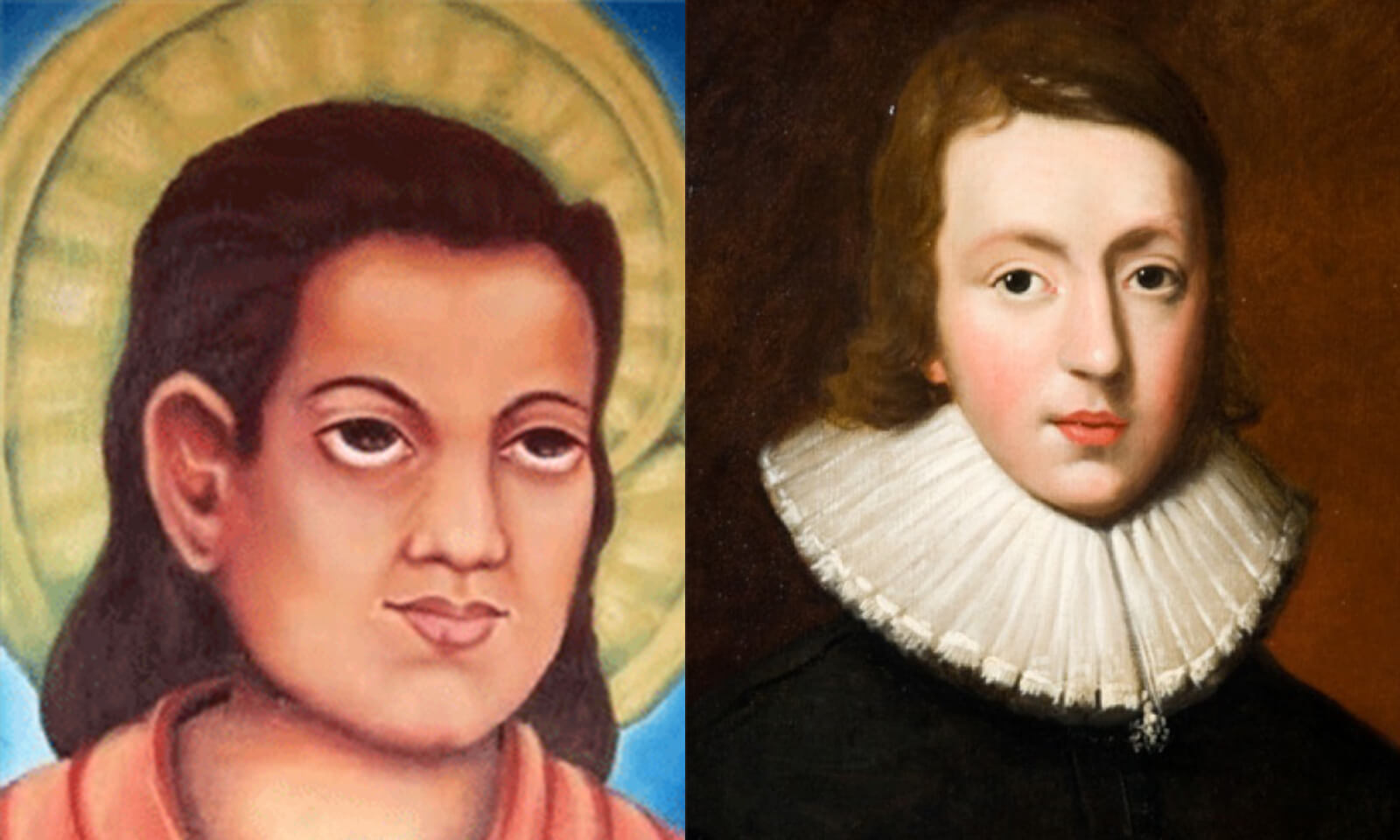
The phenomenon of blindness in the lives of poets has often been interpreted as both a biological limitation and a metaphysical expansion of vision. Two towering figures in world literature – John Milton of seventh century England and Bhima Bhoi of nineteenth century Odisha, India – stand as luminous exemplars of this paradox. Both men were deprived of physical sight but enriched humanity with literary works of lasting moral and spiritual resonance. Milton, the author of Paradise Lost, became the voice of the English Renaissance and puritan revolution, while Bhima Bhoi, the mystic poet of the Mahima Dharma, articulated a vision of compassion and egalitarian spirituality from the margins of colonial India. Despite their literary activities reflects a striking convergence: through blindness, they transformed inward vision into outward enlightenment.
Blindness and Inner vision –
Milton lost his eye sight completely by 1652, in the prime of his intellectual and political life. Far from silencing him, blindness intensified him imaginative faculty. He invoked the ‘celestial light’ to illuminate his mind, seeking divine inspiration to compensate for the loss of physical perception. In paradise lost, the poet’s blindness becomes a metaphorical condition, emblematic or humanity’s exile from divine truth yet also a site of redemption through poetic creation.
In his famous sonnet XIX (‘On his Blindness’) he laments the loss of his light but reconciles it with submission to divine will
When I consider how my light is spent
Ere half my days in the dark world and wide
They also serve who only stand and wait.
(Milton, Complete Shorter Poems, 182)
Here, blindness is not a terminal loss but an occasion for theological reflection. The closing line transforms helplessness into service, patient endurance into divine participation.
In Paradise Loss, Milton invokes ‘celestial light as his new source of vision
So much the rather thou, celestial light.
Shine inward, and the mind
Through all her powers
Eradicate, their plant eyes, all mist
From thence
Purge and disperse, that I may see and tell
Of things invisible to mortal sight.
(Milton, Paradise Lost-III, 51-55)
Blindness here becomes paradoxically the very condition for perceiving ‘Things Invisible’ – a gift of inward sight.
Similarly, Bhima Bhoi, though less internationally recognized, occupies a crucial position in Odia literature and spiritual thought. He was born into poverty and blindness, yet his vision transcended the limitations of caste, creed and sensory deprivation. For Bhima Bhoi, blindness was not a handicap but an opening toward divine communion. His verses in Stuti Chintamani and other compositions employ blindness as a trope for worldly ignorance, offering spiritual sight as the path to liberation. Bhima Bhoi, similarly, articulated his own blindness not as limitation but as spiritual gift. His self-sacrificial plea has become immortal in Odia cultural memory.
“Mo jeevana pachhe narke padithau
Jagata uddhara heu.”
(9td. in Tripathy, 47)
Let my life not in hell if it helps redeem the world. This radical statement reflects the ethic of Universal compassion that defined Mahima Dharma. Bhima Bhoi blindness deepened his empathy with the marginalised – Dalits, tribals and the oppressed of colonial Odisha. In another verse he confesses –
Andhara deha andhara chakure,
Dekhe nahi jagata
Boli je ananda bhavare,
Se sabu nayanaku dekhai.”
(9td. in Mohapatra, 212)
(This body is dark, these eyes are blind
I cannot see the world,
Yet in blissful devotion,
The true eyes are opened)
For him blindness itself was a metaphor for the delusion of worldly ritualism. Spiritual devotion granted ‘True eyes’, enabling vision of the ultimate reality beyond caste and hierarchy.
Like Milton, Bhima Bhoi turned as disability into a heightened receptivity to inner vision, articulating truths that extended beyond the empirical world.
Poetic Mission and cultural context –
Milton’s literary mission was deeply intertwined with his political and theological commitments. As a defender of republican ideals and an opponent of monarchical absolutism, his works combined poetic grandeur with civic purpose. In Areopagitica, his prose celebrated the freedom of expression, while in paradise lost, be sought to “Justify the ways of God to men.” Milton’s blindness did not prevent him from fulfilling his self. Conception as a prophetic bard in the classical tradition, shaping national identity through epic and theological discourse.
His blindness intensified his prophetic posture; he became the bard who speaks not from sensory experience but from divine revelation, a king to Homer or Tiresias. His epic thus merges theological authority with the pathos of personal loss. His blank verse, rich with Latinate diction and classical allusions, carries a universal scope. For instance, Satan’s defiance in Book-1 reveals the power of the mind.
The mind is its own place, and in itself.
Can make a heaven of Hell, a Hell of Heaven.”
(Paradise Lost-1, 254)
Such lines resonate beyond theology, offering psychological insight into the autonomy of human will.
Bhima Bhoi’s poetry, by contrast, is deliberately simple and lyrical, written in Odia to reach ordinary people. His compositions were often sung in congregational settings, incusing rhylum and oral immediately into spiritual doctrine, where Milton achieves sublimit through erudition. Bhima Bhoi achieves depth through accessibility.
“Nahi jati bheda, nahi kula gotra,
Nahi thila Kona pratha;
Sabuku saman bhabare dekhi,
Jagannath eka nath.
(9td. In Das-88)
(There was no caste, no clan, no ritual;
All were seen as equal,
One lord was the master of all)
Thus, Milton addressed the theological destiny of human kind within a Christian epic frame, Bhima Bhoi addressed the social and spiritual liberation of the downtrodden. Both, however, wrote with the conviction that poetry could transform moral consciousness.
Blindness as Empowerment –
The comparison between Milton and Bhima Bhoi underscores blindness not as a mark of deprivation but as an enabling condition of creativity. For Milton, blindness compelled him to rely on divine inspiration producing a cosmic epic redefined English literature.
For Bhima Bhoi, blindness symbolised freedom from superficiality, empowering him to champion compassion and equality. Their blindness thus became a forth of empowerment. Sharpening purpose, broadening vision and expanding the reach of poetry itself.
Conclusion –
John Milton and Bhima Bhoi, separated by centuries and continents, reveal how physical blindness can paradoxically illuminate the moral and spiritual landscape of humanity. Milton sought to reconcile divine justice with human freedom through epic grandeur, while Bhima Bhoi’s devotional verse articulated compassion and equality for the oppressed. Their works prove that true vision is not dependent on the eyes but on the soul. By giving light to others dwelling in darkness, both poets transformed blindness into a form of transcendent creativity, leaving a legacy that continues to inspire across cultures.
References –
- Milton, Paradise Lost Book – III (lines ‘Celestial light…’ passage)
- Milton, Paradise Lost Book-I (The Mind is its own place…)
- Bhima Bhoi, as quoted in Wikipedia (“Mo jeevan pachee…”)
- Stuti Chintamani verse (“Oh preceptor, Oh Lord…”)
- Bhim Bhoi profile and works.
- Das, Sisir Kumar – History of India Literatures – 1800-1910 Sahitya Akademy, 1991.
- Mahapatra Sitakanta – Bhima Bhoi verses ok a Blind saint of Odisha, Oxford University Press, 1998.
- Milton John Complete Shorter poems – Edited by John Carey, 2nd ed., Longman, 1997.
- Tripathy, K.C. – Bhima Bhoi and Mahima Dharma : A study in social protest and religious reform in Orissa – Manohar Pub.-2005)