
Differently-abled women, once reduced to symbols of lack, emerge instead as complete. Presences, bearing voices that exceed the body’s limits. When literature learns to listen to that deeper seeing, silence finally loosens its hold.
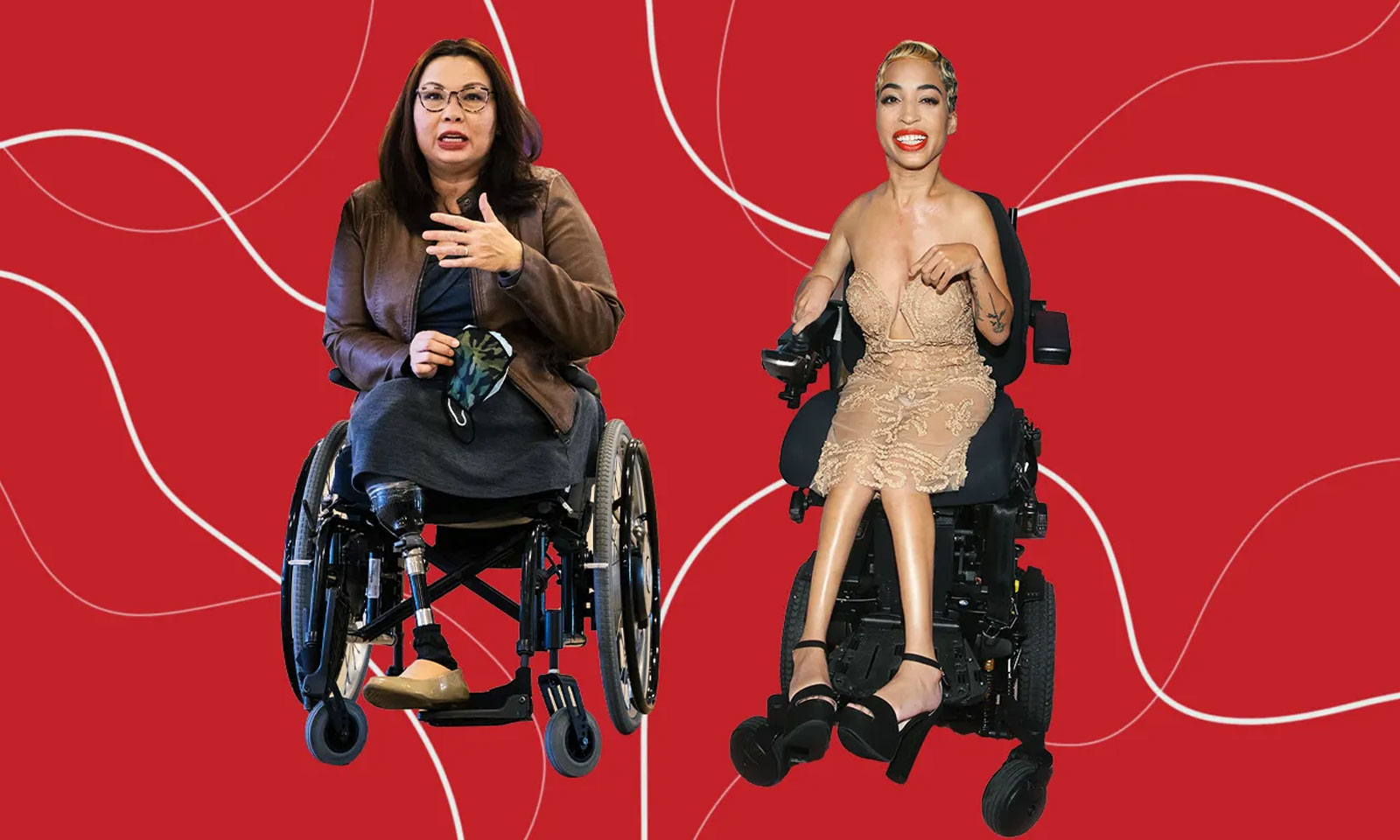
On certain afternoons, when memory grows heavier than times, literature remembers women whose bodies did not obey the words expectation. They appear quietly, like characters in a forgotten village, carrying limbs that tremble, eyes that fail to see, minds that wander where order cannot follow. Their suffering does not announce itself loudly, it accumulates, layer upon layer, until the body itself becomes a story others feel entitled to interpret pain does not vanish it lingery, transform and returns as myths as in the world imagined by Gracia Marquez.

Dr. Jachindra Rout
7008758624
In western literature, differently abled women have long existed in such a space : A visible yet unheard, present yet untranslated. Their bodies are made legible before their voices are allowed to speak. Literature, rather than merely reflecting social attitudes, often participates in this translation – sometimes cruelly, sometimes sentimentally and only rarely with justice.
Disability, gender and the literary imagination –
Disability in western literature has seldom been represented as a neutral condition. Feminist disability critics argue that, disability is culturally produced rather than merely biologically given. As Rose Marie Garland Thomson asserts, “Disability is not simply a bodily trait but a social position that is produced by cultural interpretation” (Extraordinary Bodies-6). When disability intersects with gender, women experience a double marginalisation – both as women within patriarchy and as a disabled bodies within ablest cultures.
Literature repeatedly frames the disabled female body as a site of excess meaning. Instead of agency, it offers spectacle. Garland-Thomson observes that female disability often functions as a visual shorthand for feminity itself” (19), reinforcing ideals of passivity, dependence and moral purity.
The Disabled woman as symbol –
Nineteenth century western literature is especially invested in symbolic representations of disabled women. In Victorian novels, chronic illness or physical weakness often signifies virtue, obedience or spiritual refinement. Sun portrayal construct the ‘Ideal woman’ as fragile and self-sacrificing, rendering disability narrative tool for containment.
Susan Wendell critiques this tendency, noting that “the social construction of disability is deeply intertwined with the social construction of gender” (the Rejected Body 57). Disabled women are expected to perform feminity while simultaneously being excluded from full womanhood. Literature mirrors this contradiction by presenting them as morally elevated yet socially powerless.
Madness, Confinement and Silencing –
Mental disability has been one of the most enduring and damaging representations of differently-abled women in western literature. Female madness is repeatedly aestheticized, punished or erased.
A canonical example is Berthe Mason in Charlotte Bronte’s Jane Eyre. Confined to the attice, Bertha is denied language, history and subjectively. Her madness legitimise her imprisonment and eventual death. Sandra Gilbert and Susan Gubar famously reinterpret her as the suppressed double of the Victorian woman, arguing that “The mad woman is the author’s double, her dark and rebellious self.” (The Mad Woman in the Attic 78). Madness here is not merely pathology but resistance rendered illegible.
Similarly, Shakespeare’s Ophelia is allowed lyricism but not survival. Her psychological breakdown is transformed into poetic imagery, flowers, water, song – until death silences her entirely. Such portrayal’s reflect what Michel Foucault describes as society’s impulse to exclude what it cannot regulate : “Madness is constructed by society as that which must be excluded.” (Madness and Civilisation, 9).
Illness, perception and Modernist Shifts –
Modernist literature begins to challenge these rigid portrayals by foregrounding consciousness and subjective experience. Virgina Woolf, herself shaped by chronic illness and mental distress, argues that literatre has failed to address illness seriously : “Illness has not taken its place with love, battle and jealously as one of the prime themes of literature.” (On Being Ill, 3)
For Woolf, illness alters perception rather than diminishing it. This recognition destabilizes the assumption that disabled bodies produce lesser minds. Though Woolf stops short of centring disabled women fully, she opens literary space for vulnerability as a valid mode of experience.
Differently – Abled women as writers in English literature –
Decisive transformation occurs when differently abled women move from representation to authorship. Writing becomes an act of reclamation.
Helen Keller, deaf blind from early childhood, radically disrupts assumptions about language and intellect. In the story of my life, she insists on cognitive and imaginative agency, refusing narratives of pity. Her work demonstrates that disability does not negate thought, it reshapes its expression.
Later writers confront disability and feminity more directly. Lucy Grealy, in Autobiography of a face, exposes the social violence inflicted upon women with disfigurement : “It was not my face that defined me. But how people responded to it.” (Grealy 5) Her suffering emerges not from important but from social cruelity. Stares, silences, exclusion.
Nancy Mairs, writing about multiple sclerosis, rejects sentimental language altogether : “I am a cripple. I choose this word to name me” (On being a Cripple, 1). By reclaiming stigmatised language, Mairs asserts authority over her identity and resists portrayal’s of disabled women as passive victims.
Sexuality, Silence and Resistance –
Western literature has often denied disabled women sexual agency, portraying them as a sexual or grotesque. Contemporary women writers challenge this erasure.
Audre Lorde, writing after mastectomy, reframes illness as political experience. In the cancer journals, she declares, “My silence had not protected me. Your silence will not protect you.” (Lorde, 18) Lorde insists that the altered female body remains desiring, thinking and resistant.
Similarly, Susan Sontag critiques the symbolic use of illness in literature, warning that metaphor itself can wound : “The most purified of, and most resistant to, metaphor.” (Illness as Metaphor, 3) This insight exposes how literary symbolism often dehumanized disabled women by transforming lived pain into abstract meaning.
Disability, History and the Body –
In contemporary western literature, disability is increasingly understood through in sectionality. Toni Harrison’s women characters bear bodies marked by historical trauma. Though not always labelled disabled, they reveal how oppression produces bodily and psychological wounds. Morrison reminds us that “The body is where history writes itself.” (Beloves, 250)
Conclusion –
And so, when the pages finally quieten and the voices retreat into memory, the differently-abled woman remains – not as a metaphor abandoned after use, not as a lesson neatly learned, but as a presence that refuses disappearance. Literature has tried many ways to contain her body into a sign that points everywhere except toward herself. Yet she persists. Because pain remembers. Because bodies remember. Because language, once seized, does not willingly return to silence.
In the early imagination of western literature the differently-abled woman was made to bear meanings too heavy for flesh-virtue, madness, punishment, purity. She was watched more than heard, interpreted more than understood. But somewhere along the long arc of literary history, the gaze faltered. The object began to speak. The body learned to write.
When differently-abled women take up the pen, literature changes its posture. It no longer looks down; it listens. The wound ceases to be decorative. Illness loses its false poetry. What emerges instead is a voice that is unashamed of pain, unromantic about suffering unapologetic about desire. These writers do not ask to be admired. They ask to be read-plainly, fully, truthfully. Like the women who live on even after death through memory and story, these women endure beyond the limits imposed upon them. Their bodies may be constrained, but their narratives are not. They move freely across genres, across histories, across silences that once tried to erase them. In doing so, they teach literature a difficult but necessary lesson : that difference is not deficit, and vulnerability is not absence of strength.
To read differently-abled women in western literature – especially when they write themselves is to unlearn the old grammar of pity and replace it with a language of presence. It is to recognise that the human story has always been incomplete, not because literature refused to listen. And now that listening has begun, there is no returning to silence.
In the end, literature must relearn what Upanishads never forgot : that wholeness is not diminished by difference. Purnam idam – from wholeness, only wholeness remains-undoes the long habit of reading disabled women as incomplete beings. And when the Bruhadaranyaka reminds us of the seer being seeing, it frees consciousness from the tyranny of organs and form. Differently-abled women, once reduced to symbols of lack, emerge instead as complete. Presences, bearing voices that exceed the body’s limits. When literature learns to listen to that deeper seeing, silence finally loosens its hold.