While “Chhai” is an attempt to break the stereotyping and negative projection of disabled women, “Subha” in one or other way reinforces the same through its narrative.
Abstract:
Though both men and women confront a lot of hardships on account of disability, the suffering of the women with disabilities usually weighs more because of traditional gender role and patriarchy. Unlike men, disabled women face severe form of social exclusion and prejudice. Literature being the mirror of society has somehow reflected such apathy of society towards the disabled women but enough has not been done to break the stereotyping and misconceptions. The negative depiction of disabled female characters is quite evident in literature from the time immemorial. In Indian context, such derogatory portrayal abounds in mythological texts and other literary creations.

Dr. Binayak Prasad Pradhan
Lecturer in English
The disabled female characters are very often projected as incapable, unproductive and burdens for the society. Such representation of disabled female characters reinforces the stereotyping and marginalization. The main apogee of this paper is to foreground the portrayal of disabled female characters with reference to Rabindranath Tagore’s “Subha” and “Chhai” by Biraja Routray.
Keywords: disability, patriarchy, stereotyping
Introduction:
The underrepresentation of female characters is quite conspicuous in both literature and popular culture. In most of the writings including mythological texts, authored by the male writers, the negative portrayal of women is quite perceptible. Mostly the women we encounter in those earlier texts are submissive, subservient and play second fiddle to the main characters. And the disabled female characters represented in literature and popular culture are usually ascribed with negativity and derogatory attributes.
Disability is often equated with negativity. The people with disabilities undergo a lot of difficulties on account of their physical disability and indifference of the society they live in. People in so-called ‘normal society’ look down upon the disabled people and treat them as ones who do not conform to the societal norms and fail to live up to the expectations. They are considered to be unproductive and incapacitated because of their impairment. Beyond their physical disability, the people with disabilities suffer more because of social exclusion, prejudice and aversion of those who consider them ‘normal’ and ‘able’. Basically, the exclusionary practices hugely problematize the existence of the disabled people. However, the disabled women wade through way more suffering and agony. Apart from disability, they are victimized by gender stereotyping.
Disabled Female Characters in Literature and Popular Culture:
In most of the literary works and cinematic representations, disabled female characters are presented from a negative perspective. We find a very tragic and pathetic disposition of disabled female characters even in some of the canonical texts. They are subordinated to the able-bodied characters in most of the texts. Jane Eyre by Charlotte Bronte is a classic example of such unfair treatment of the disabled female characters. Jane Eyre, one of the greatest classics of 19th century English literature features a disabled female character, Bertha Mason, Mr. Rochester’s first wife. Bertha is depicted as excessively violent, insane and kept in the attic. As Bertha suffers from mental illness, she is isolated and kept in the attic. The supremacy or positivity of Jane Eyre, the protagonist is defined against the negativity and violent attitude of Bertha. Considering Bertha as monstrous and a menace to the society, Rochester keeps her locked in the attic of his estate. Such social exclusion and dehumanization further aggravate the mental illness of Bertha. Her aggressive behaviour and insanity can be studied as a reaction against the patriarchal society and exclusionary practices. Bertha loses her subjectivity and identity in this novel. So, such treatment of Bertha exacerbates the negative stereotyping related to disability.
Apart from English classics, such representation of female characters with disabilities and negative tropes are seen in Indian epics and major literary works. Manthara, a hunch-backed woman appearing in the Ramayan, is presented quite negatively. Her physical deformity is associated with her manipulative and crooked attitude. She is depicted as sinisterly evil and is accused of poisoning the mind of Queen Kaikeyi and banishing Lord Ramachandra from Ayodhya. Deformity is viewed as a punishment in society and this assumption is reflected in case of Surpnakha in the Ramayan. Even some of the modern critics look at the self-inflicted blindness of Gandhari in the Mahabharata from a different perspective. Her blindness is taken as a deliberate move of the then society to make her subservient to patriarchy. In addition to this, some Indian novels like Shame by Salman Rushdie, Clear Light of Day by Anita Desai etc. also fail to attribute subjectivity to disabled female characters.
However, there are a few inclusive literary works which have accorded due weightage to the disabled female characters by situating them at the centre of the narrative. It is Hellen Keller’s The Story of My Life that marked a paradigm shift and subverted the negative tropes. In fact this autobiography challenged the deeply seated prejudice and misconception about disability. Hellen Keller not only advocated for the equality of the disabled people but also changed the perception of the people by her stunning saga of endurance, resilience and triumph over her crises. Inspite of her ailment and disability, she secured a distinct place in the world of literature and activism and thereby stood as a great source of inspiration for millions of people all across the globe. Another autobiography, Seize the Day by Tanni Grey-Thomson can also be studied as a ground-breaking text that hugely influenced the populist perception about disability. Inspite of her disability due to spina bifida, her outstanding performance as a Paralympic athlete startled the entire world. Describing her journey from helplessness to acclamation and popularity, her autobiography inspires all the disabled women across the world and challenges the deeply entrenched prejudice of the people about disability.
In addition to literature, popular culture has also placed disabled women at a dignified position that they deserve. Some of the cinematic representations over the years have endeavoured to break free from stereotypes with a view to change the attitude of society towards disability. The famous Bollywood movie, Black catches our attention by its positive portrayal disabled female character. Being inspired by the story of Hellen Keller, this movie accords utmost weightage to its protagonist, Michelle McNally, who suffers from hearing and visual impairment. The way Michelle McNally overcomes her frustration and embarks on the journey of self-discovery is something that constitutes the central theme of this movie. Another disabled female character who is portrayed under a positive light is Naina Mathur in Bollywood movie, Hichki. Naina’s deformity does not abstain her from materialising her dreams. Though, she undergoes immeasurable humiliation and insults by her colleagues and students because of her Tourette syndrome during the initial phase of her teaching career, she comes out victorious at the end of the movie. With her relentless efforts and perseverance, she endeared herself to her dear students and instilled in them a great sense of confidence.
“Subha” Vs. “Chhai”:
The presentation of disability in literature is not invariably the same. Some of the literary works perpetuate the negative ideas and beliefs about disability whereas some other texts challenge the stereotype and devaluation of the disabled characters. While thinking of the the projection of disabled female characters in Indian literature; we are drawn towards some of the short stories authored by Rabindranath Tagore. Much prior to the conceptualization of disability studies or theory, Tagore raised certain pertinent issues in stories like “Drishtidaan” and “Subha”.
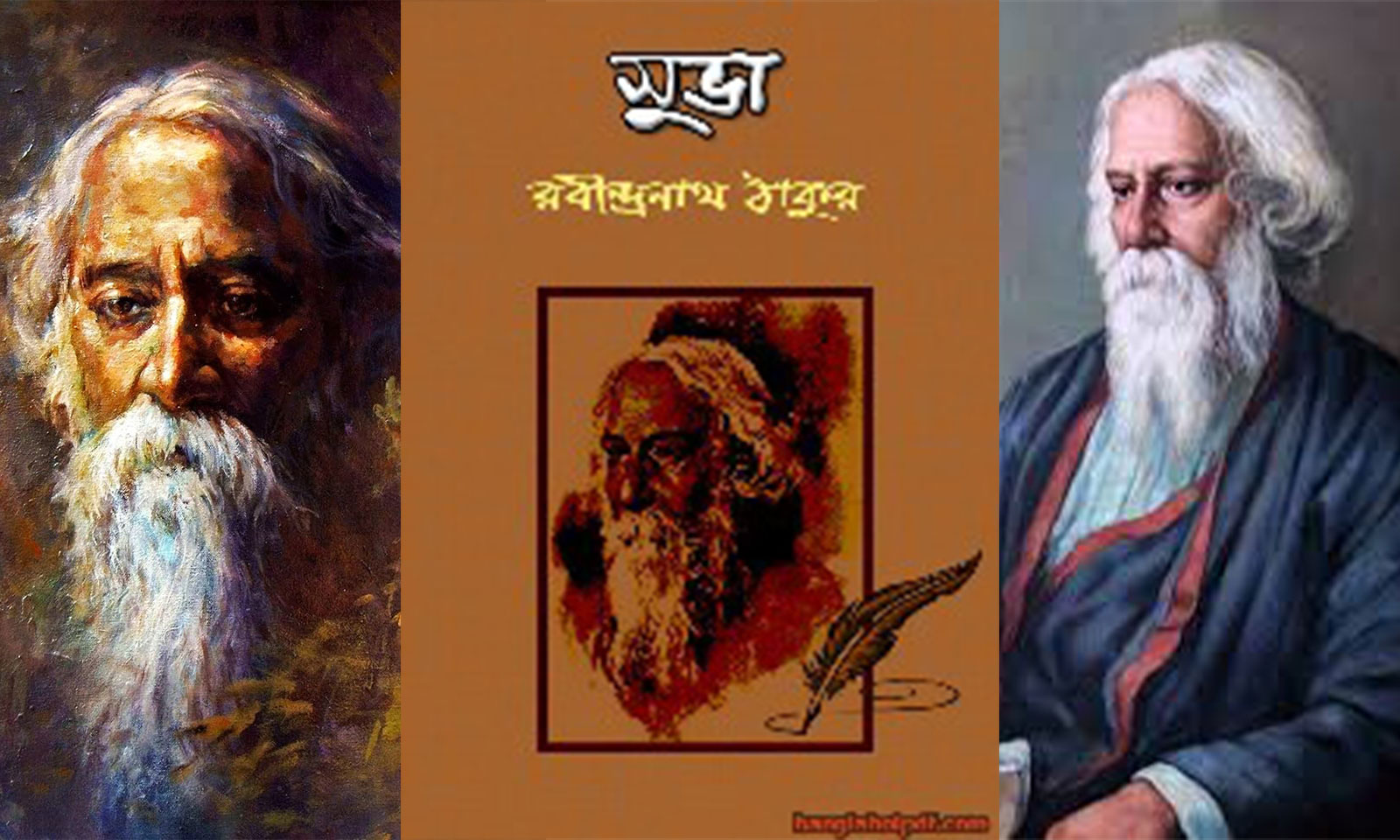
Tagore’s “Subha” centres around a speech impaired girl named by Subha. Subha faces so much of difficulties because of her deformity. Even she is deprived of love and affection of her own biological mother who takes her as a shameful reminder of her womb. Such treatment of her own mother and people around her makes her ashamed of her own existence. She is considered as a curse for the sin committed in her earlier birth. The story vividly portrays the apathetic attitude of the society towards disability and disabled people. Being a disabled female character, Subha grapples with both patriarchy and disability or physical deformity. It is the prejudice and aversion of the people and society which significantly adds to the plight of Subha. Tagore sketches Subha as a very subservient and meek character who does not have courage to revolt against patriarchal society and assert her own identity.
Having seen the indifference of the so-called able people in her society, she seeks communion with nature and animals. While describing her association with animals, Tagore writes,
Subha did have a handful of intimate friends. Sorboshi and Panguli, the two cows at the stable, recognized her by her footsteps, they heard her call out their names. In her murmurings, there was a gentleness, which they felt and understood much better than any language petted them or scolded them or even pleaded with them, those cows understood her feelings better than humans (2).
These lines are suggestive of the indifference and insensitivity of the people towards Subha because of her deformity. After being ignored and alienated by her own society, she befriends those animals and nature which sooth her heart and reciprocate her feelings in a much better way. Her close association with nature and animals hints at the failure of the society to accommodate disability and the people with disabilities. While the two cows are her close companions and shoulders to cry, her own family fails to understand her. Howard Margolis and Arthur Shapiro while commenting on disability and disabled are of the view that “ Although persons with disabilities have a legal right to live in the least restrictive environments and with non-disabled persons on an equal basis, such interactions are hardly equal” (21).
Coming under social pressure, Subha’s parents decide to get her married without her consent. Her parents never spare a thought to know about the personal feelings of Subha. She is just used as a negotiable and marketable commodity in the hands of the vanguards of patriarchy. Along with her speech, she loses her identity, liberty and more importantly her subjectivity. Just for fulfilling the moral obligation and evading the social pressure, her parents think of her marriage. Concealing her speech impairment, her parents get her married in a far off place only to face rejection and humiliation.
Having discovered the fact that Subha suffers from speech impairment; her husband abandons her and ties the knot with another girl. This rejection of Subha foregrounds the social rejection and marginalization of disabled people. Subha fails to qualify for a human being in the eyes of the society. She is replaced by an able-bodied girl and such replacement belittles her importance in society. So, this story interprets disability as a punishment for the sin committed in previous birth and this is vindicated by the unfair treatment of Subha’s mother.
Biraja Routray has carved out a niche for himself in Odia literature by dint of his exceptional creative brilliance. With a voluminous oeuvre to his credit, he has substantially contributed to the enrichment of Odia literature. Some of his works have been critically acclaimed for the positive portrayal of disabled characters. “Chhai” (Silhouette) is one of his best short stories which locates a disabled female character, Adyasha at the centre of its narrative.
“Chhai” by Biraja Routray is a challenge to the stereotypical representation and devaluation of disability and disabled female characters. Tagore’s story, “Subha” in one or other way buttresses the negative presentation of disabled female characters whereas Routray’s “Chhai” questions these negative tropes. Instead of portraying a submissive and passive character, Routray chooses a character who suffers from hearing and speech impairment but retains her originality and subjectivity. Unlike Subha, Adyasha gains agency in this story. Going away from the tradition of negative representation of disabled character, Biraja Routary attempts to endow Adysha with certain weightage and significance.
The parents of Subha get her married just to get rid of a sort of burden and social obligation. They neither take an account of Subha’s personal desires nor take any measures for her independence and dignity. On contrary, Adyasha in “Chhai” takes the centre stage. Her father, Saria reposes his faith in her and enrols her in a school at Bhubaneswar, opening the avenues for her growth and self-discovery. Such gesture of Saria can be construed as a wake-up call for the society and the people who very often remain oblivious to the potential and capabilities of the disabled people. Adysha’s commendable performance in her studies is something that inspires the disabled people. Education serves as a weapon to Adyasha to defend herself and secure her own identity. Instead of being sceptical about her capabilities, Saria shows a greater sense of optimism by educating her. Saria is pretty confident that her daughter will succeed in her venture and bring laurels in future. After a long gap, Adyasha returns home from Bhubaneswar with her teacher, Swapnashu Sir. While talking to Saria, Swapnashu Sir says, “ I will come to pick her up next week. She is doing well and the board examination shall commence after two weeks. If she scores well, she will go to Hyderabad for her higher studies. After spending five years there she will surely crack a job. She won’t be a burden for you anymore” (32). These words of Swapnashu Sir bring in a flurry of excitement for Saria and fill him with unspeakable joy and pride. But at the same time, Saria gets emotional at the prospect of sending her daughter to such a distant place like Hyderabad. The void created after the demise of Saria’s wife was somehow compensated by his only daughter, Adyasha who was in fact his only companion. However, Saria musters up courage and decides to let her daughter go for higher studies for the sake of her bright future. Nobody could understand Saria better than his daughter. Towards the end of the story, Adyasha makes Saria stand in front of the bright sun and with hands over her chest, directs his attention to the long silhouette created in sun light. This gesture of Adyasha was much more powerful, touching and expressive than the human language.
These two short stories share the divergent perspectives of the society. Subha in Tagore’s story is considered as a burden and liability for her family and suffers from social exclusion. Moreover, she is delivered over as a commodity in her marriage by her parents. The most pertinent aspect of the story is that the parents feel embarrassed because of Subha’s deformity and do not disclose it during her marriage. Such concealment results into the failure of Subha’s marriage. On the other hand, Adyasha is encouraged to pursue her studies for fulfilling her dreams and aspirations. Moreover, instead of being ashamed of her disability, Saria accepts it. Saria’s unconditional love for Adyasha is quite evident in his caring attitude. Though Adyasha’s mother breathes her last after a few days after her birth, Saria shoulders all the responsibilities and never lets Adyasha feel the absence of her mother. He does not even part with his daughter for a moment. This clearly shows the unwavering love and support of Saria who never takes Adyasha as a burden. Being a responsible father, Saria exhorts his daughter to be self-sufficient and independent in her life. Unlike Saria, the parents of Subha remain indifferent and insensitive to the feelings and emotions of Subha. They show no concern for the personal growth and development of Subha. Due to such negligence and indifferent attitude, Subha turns to nature and animals. Subha’s suffering from social exclusion is contrasted with Adyasha’s journey of exploration and acquisition of new knowledge. The society undervalues a disabled person and fails to identify the abilities which eventually deprive the disabled people of the things they deserve. While ascribing subjectivity to the disabled people, Anthony Synnott writes, “the body is also and primarily, the self. We are all embodied” (1).
Conclusion:
So, in case of “Chhai”, the writer advocates for the equal treatment of disabled people and urges the society to trace out the potential of the disabled people and take necessary measures for nourishing the said potential to its maturity. Instead of focusing on disabilities and limitations, the society must direct attention to the abilities possessed by the specially-abled people. On the other hand, “Subha” foregrounds the exclusionary practices which always hinder the growth and progress of disabled people. This story only describes the hardships and suffering of Subha and does not accord any subjectivity to Subha. While “Chhai” is an attempt to break the stereotyping and negative projection of disabled women, “Subha” in one or other way reinforces the same through its narrative.