
A rights-based, climate-aware, and employment-oriented disability budget will not only uplift persons with disabilities but also strengthen Odisha’s overall human development outcomes.
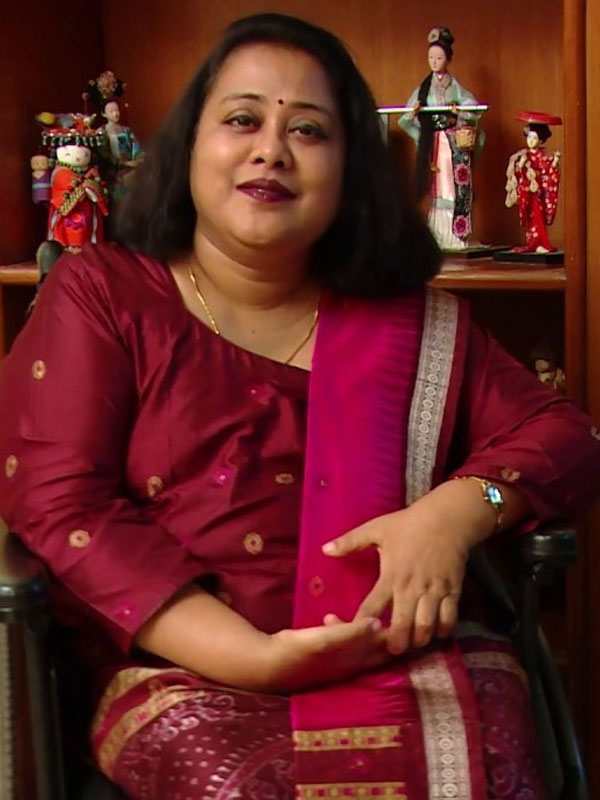
Dr. Sruti Mohapatra
CEO Swabhiman Convenor Odisha State Disability Network contact@swabhiman.org
The State Budget is the principal instrument through which Odisha operationalises constitutional mandates, statutory obligations, and inclusive development priorities. For persons with disabilities, budgetary allocations directly affect access to education, healthcare, livelihoods, mobility, social protection, and participation in public life. Disability budgeting therefore has a direct bearing on equity, service efficiency, and human development outcomes.
In recent financial years, disability-related allocations have remained largely incremental despite rising service costs, inflationary pressures, and expanded responsibilities under the Rights of Persons with Disabilities Act, 2016 and the National Education Policy, 2020.
At the same time, Supreme Court jurisprudence has affirmed accessibility as intrinsic to the rights to equality, dignity, and life under Articles 14, 19, and 21 of the Constitution, placing a clear positive obligation on States. In the context of post-pandemic recovery, recurring climate events, rapid urbanisation, and digitalisation of public services, a recalibrated and strategically aligned disability budget is necessary to meet legal obligations, reduce long-term fiscal risks, and ensure inclusive growth.
Suggestions for 2025-26 Budget
1. Rebalance the Disability Budget: From Protection to Participation
• Gradually reduce the dominance of pensions and institutional care to below 50% of total disability spending.
• Increase enabling investments (education, employment, accessibility, health, AT, climate resilience) to at least 50% over the next two budget cycles.
• Treat social protection as a foundation, not the final outcome.
2. Accessibility as a Core State Obligation
• Earmark at least 5–6% of total disability-related allocations for physical, transport, digital, and communication accessibility.
• Make accessibility non-negotiable in:
o Government buildings and district offices
o Schools, colleges, hostels, ITIs
o Public transport hubs and buses
o State digital platforms and services
• Introduce district-level accessibility plans, monitored annually.
3. Inclusive Education & Early Intervention
• Raise education-related disability spending to 5-6% of the total envelope.
• Prioritise:
o Early identification and intervention (0–6 years)
o Resource teachers, therapists, and itinerant support models
o Assistive learning tools and accessible digital content
• Shift focus from enrolment to retention, transition, and completion, especially beyond Class 8.
4. Health, Rehabilitation & Mental Health Integration
• Allocate 5-6% of disability-linked budgets to disability-inclusive health systems.
• Integrate disability into:
o Primary healthcare and community health centres
o Mental health and psychosocial support services
o Rehabilitation and assistive device repair at district level
• Prioritise climate-sensitive health responses for persons with disabilities.
5. Employment, Skills & Livelihoods
• Increase economic participation investments to 5-6% of disability spending.
• Focus on:
o Disability-inclusive skilling and apprenticeships
o Wage incentives for private employers
o Cooperative enterprises and self-employment models
o Workplace accessibility grants for MSMEs
• Shift from token placements to sustainable livelihoods.
6. Strengthen DPOs, NGOs & Community-Based Systems
• Ensure at least 5-6% of the disability budget directly supports:
o Disabled Persons’ Organisations
o Community-based rehabilitation
o District and block-level outreach
• Move from short-term grants to multi-year funding cycles with outcome tracking.
7. Caregiver and Family Support
• Introduce a dedicated caregiver support component (5–7%), prioritising:
o Women caregivers
o Families of persons with high support needs
• Combine financial support with respite care, counselling, and training.
8. Climate Justice & Disaster Preparedness
• Ring-fence 5–6% of disability allocations for:
o Disability-inclusive disaster preparedness
o Heatwave, cyclone, and flood response planning
o Climate-resilient livelihoods in coastal and tribal districts
• Make disability inclusion mandatory in State Disaster Management Plans.
9. Data, Research & Innovation
• Allocate 5-6% for:
o Disability-disaggregated state data systems
o Research on Odisha-specific challenges (tribal areas, migration, climate risks)
o Assistive technology adaptation using local innovation ecosystems
10. Governance, Accountability & Participation
• Introduce a Disability Budget Marker across all state departments.
• Table an Annual Odisha Disability Budget Statement in the Assembly.
• Mandate structured consultations with DPOs at state and district levels.
• Establish public dashboards tracking outcomes, not just expenditure.
Closing Note
Odisha has shown leadership in social protection and community engagement. The next step is to convert intent into infrastructure, services, and opportunities. A rights-based, climate-aware, and employment-oriented disability budget will not only uplift persons with disabilities but also strengthen Odisha’s overall human development outcomes.
ANNEXURE I
Odisha Disability Budget Priorities: Mapping to Existing SSEPD Schemes & Line Departments (Finance & Planning Review Matrix)
| Priority Area | Existing SSEPD Scheme / Role | Current Share (Approx.) | Suggested Share / Target | Key Line Departments for Convergence | Finance-Facing Implementation Focus | |
|---|---|---|---|---|---|---|
| Social Protection & Income Security | Madhu Babu Pension Yojana (MBPY); Disability Pension | 40–45% | Cap below 50% | Finance; PR&DW; H&UD | Automatic inclusion via UDID; inflation-linked revision; convergence with livelihoods | |
|
DDRS; District outreach programmes | 15–20% | Maintain minimum 10% (multi-year) | W&CD; ST & SC Dev; PRIs | Shift to 3–5 year programmatic grants; DPO-led delivery in tribal districts | |
| Inclusive Education & Early Intervention | Scholarships; Hostels; Residential school support | 10–12% | Increase to 15–18% | School & Mass Education; Higher Education; SD&TE | Co-financing of resource teachers, therapists, assistive learning tools | |
| Health, Rehabilitation & Mental Health | Disability certification camps; limited rehab | <10% | Increase to 12–15% | Health & FW; NHM | Integrate disability services into PHCs/CHCs; mental health scale-up | |
| Accessibility (Built, Transport, Digital) | RPwD Act coordination | <5% | Increase to 10–12% | Works; H&UD; Transport; E&IT | District accessibility audits; mandatory compliance in public infrastructure | |
| Employment, Skills & Livelihoods | Limited linkage role | 7–8% | Increase to 15% | SD&TE; Labour & ESI; MSME; Mission Shakti | Wage incentives; inclusive skilling; SHG and MSME accessibility grants | |
| Caregiver & Family Support | No dedicated scheme | Nil | 5–7% | W&CD; Health & FW | Pilot caregiver allowance; respite care; family training models | |
| Climate Justice & Disaster Preparedness | Ad hoc inclusion | Minimal | 8–10% | OSDMA; FE&CC; Labour | Disability-inclusive disaster plans; accessible shelters; resilient livelihoods | |
| Data, Research & Innovation | Fragmented data | Nil / marginal | 3–5% | Planning & Convergence; E&IT; Higher Education | Disability data systems; Odisha-focused research; assistive tech innovation | |
| Governance, Accountability & Participation | SCPD; RPwD structures | 3–4% | Maintain 3–4% | SSEPD; Planning & Convergence | Disability Budget Marker; annual Disability Budget Statement; dashboards |
ANNEXURE II
District-wise Pilot Implementation Matrix (For Phased Roll-out and Budget Testing)
| District Category | Proposed Pilot Districts (Indicative) | Rationale | Priority Focus Areas | Lead Departments at District Level |
|---|---|---|---|---|
| Tribal & Aspirational | Malkangiri, Nabarangpur, Rayagada, Kandhamal | High disability prevalence; service gaps; NGO/DPO presence | CBR; inclusive education; health & rehab; climate resilience | SSEPD; ST & SC Dev; Health; School & Mass Education; OSDMA |
| Coastal & Climate-Vulnerable | Kendrapara, Jagatsinghpur, Puri, Balasore | Cyclone and flood exposure; livelihood insecurity | Disaster preparedness; accessible shelters; livelihood inclusion | OSDMA; Labour; PR&DW; SSEPD |
| Urban & Peri-Urban | Khordha (Bhubaneswar), Cuttack, Rourkela | Infrastructure concentration; employment potential | Accessibility; skilling; employment; digital inclusion | H&UD; Works; SD&TE; MSME; SSEPD |
| KBK Region | Koraput, Kalahandi, Bolangir | Poverty-disability overlap; migration | Social protection + livelihoods transition; caregiver support | SSEPD; PR&DW; Mission Shakti; Labour |
| Industrial & Employment Hubs | Jharsuguda, Angul, Sundargarh | Industry presence; CSR potential | Employment incentives; workplace accessibility | MSME; Labour; Industries; SSEPD |
Finance & Planning Note (Implicit Logic for Review)
• No creation of parallel structures
• Reallocation and convergence within existing envelopes
• Pilot-based scaling before state-wide expansion
• Clear percentage ceilings to prevent pension-only dominance
• District administration as implementation anchor