

In recent years, Artificial Intelligence (AI) has begun to influence almost every field of human activity—from finance and transportation to education and healthcare.
Mental health and developmental disabilities are no exception. Among these, intellectual disability presents a particularly important area where technological advances may significantly improve assessment, care, and quality of life.
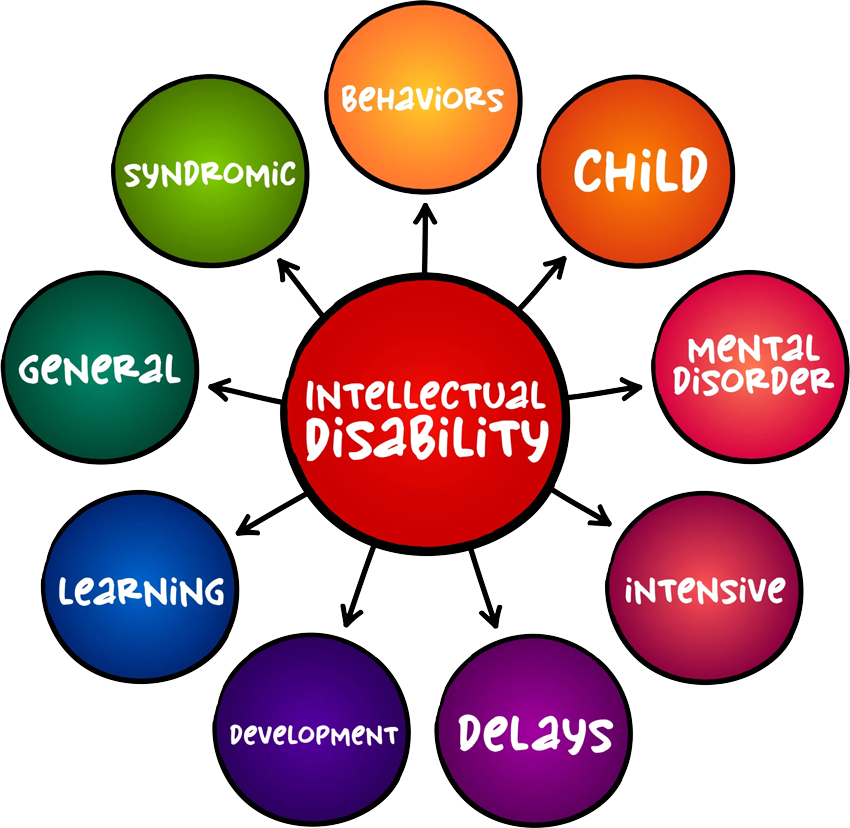
Intellectual disability (ID) is a neurodevelopmental condition characterized by limitations in intellectual functioning and adaptive behaviour. These limitations affect everyday skills such as communication, learning, social interaction, and independent living. The condition begins during the developmental period, usually before the age of eighteen, and its impact continues throughout life.
Traditionally, support for individuals with intellectual disability has relied heavily on families, educators, therapists, and healthcare professionals. While these supports remain essential, the emergence of AI-based tools is beginning to reshape how care, learning, and assistance can be delivered. When used thoughtfully, AI has the potential to complement human care and create more inclusive environments for people with intellectual disability.
Intellectual disability is defined by three core features: significant limitations in intellectual functioning, deficits in adaptive behaviour, and onset during the developmental period.
Intellectual functioning refers to abilities such as reasoning, learning, problem solving, and abstract thinking. Adaptive behaviour refers to everyday practical skills—such as communication, social interaction, and self-care—that allow a person to function independently.
The severity of intellectual disability varies widely. Some individuals with mild intellectual disability can live relatively independent lives with minimal support, while those with more severe forms may require lifelong assistance for daily activities.
People with intellectual disability often encounter barriers in education, employment, healthcare access, and social participation. In many parts of the world, particularly in low-resource settings, services for developmental disabilities remain limited. This gap between need and available support is one of the reasons why technological innovations such as AI have generated considerable interest.
Artificial Intelligence broadly refers to computer systems that can perform tasks typically requiring human intelligence. These include recognizing patterns, processing language, learning from data, and making predictions.
In healthcare and education, AI is already being used to analyse large datasets, support clinical decision-making, and personalise learning experiences. For individuals with intellectual disability, these capabilities may offer practical solutions in areas where traditional services are not enough.
Rather than replacing human professionals, AI can act as an assistive tool—supporting clinicians, educators, caregivers, and individuals themselves.
Early identification of developmental disorders is crucial. Interventions introduced during early childhood often lead to significantly better long-term outcomes. However, detecting intellectual disability or related developmental delays at an early stage can be challenging, particularly in areas where specialists are scarce.
AI-based systems are beginning to assist in developmental screening. Machine learning algorithms can analyse data from developmental checklists, speech patterns, movement analysis, and behavioural observations. In some experimental settings, AI tools have been used to analyse home videos of infants to detect early signs of developmental delay.
Another area where AI shows promise is the identification of genetic syndromes associated with intellectual disability. Some AI programs can analyse facial features and compare them with large databases of known syndromes, assisting clinicians in reaching more accurate diagnoses.
While these tools cannot replace clinical judgement, they may serve as useful screening aids, especially in primary care or community settings where developmental specialists are not readily available.
Education is one of the most significant challenges for children with intellectual disability. Conventional classroom models are often designed around standardised teaching methods, which may not accommodate diverse cognitive abilities.
AI-driven educational platforms have the potential to create personalised learning environments. These systems can continuously assess a learner’s progress and adapt teaching methods accordingly. If a student struggles with a concept, the program can slow down, provide simpler explanations, introduce visual aids, or repeat the lesson in a different format.
Such adaptive learning systems allow each student to progress at their own pace. This flexibility is particularly beneficial for learners with intellectual disability, who may require more repetition and structured guidance.
Gamified educational tools powered by AI can also improve engagement. Many children learn more effectively when lessons are presented in an interactive and visually stimulating format rather than through traditional instruction alone.
Communication difficulties are common among individuals with intellectual disability, particularly when language delays are present. Assistive technologies have long been used to support communication, but AI is now making these systems more responsive and intuitive. Augmentative and Alternative Communication (AAC) devices can now incorporate predictive algorithms that learn from a user’s previous communication patterns. Over time, the system becomes better at anticipating the words or phrases the user may want to express.
Speech-to-text and text-to-speech technologies also allow individuals with reading or writing difficulties to interact more easily with digital platforms. AI-based language simplification tools can convert complex sentences into simpler language, making written information more accessible. In some cases, conversational AI systems are also being used to help individuals practise social communication skills in a low-pressure environment. One of the long-term goals in disability care is to maximise independence while ensuring safety. AI-enabled smart technologies are increasingly being explored for this purpose.
Voice-activated assistants, for instance, can help individuals manage daily routines by providing reminders for medication, appointments, or household tasks. Smart home systems can automate lighting, appliances, and security systems, reducing the complexity of everyday living. Navigation apps equipped with AI can guide individuals through unfamiliar environments, offering step-by-step directions using simple instructions or visual cues. Some wearable devices are also capable of monitoring location or detecting falls, allowing caregivers to respond quickly in case of emergencies. For families supporting individuals with intellectual disability, such technologies can provide an added sense of security.
People with intellectual disability often experience poorer physical and mental health outcomes compared to the general population. Communication barriers, limited health literacy, and diagnostic overshadowing frequently contribute to delayed or inadequate care. AI-based healthcare tools may help address some of these challenges. Remote health monitoring systems can track sleep patterns, physical activity, heart rate, and other physiological indicators. Changes in these patterns may alert caregivers or clinicians to potential health issues.
AI systems can also help translate complex medical information into simpler language or pictorial formats, making health instructions easier to understand.
Telemedicine platforms enhanced with AI triage tools may further improve access to care, particularly for individuals living in remote areas.
The role of caregivers—often parents or family members—is central in the lives of individuals with intellectual disability. Caregiving can be rewarding, but it can also be physically and emotionally demanding.

AI-powered monitoring and behavioural tracking systems may help caregivers better understand patterns in behaviour. For example, certain systems can analyse environmental and behavioural data to identify triggers for agitation or distress. Digital care-management platforms can also help organise therapy schedules, medical appointments, and progress tracking, making coordination between different professionals more efficient.
While technology cannot replace emotional support, it may reduce some of the practical burdens associated with long-term caregiving. Despite its promise, the use of AI in disability care raises important ethical considerations.
One major concern is privacy. AI systems often rely on large amounts of personal data, including health records and behavioural information. Ensuring that this data is securely stored and used responsibly is essential. Another issue is algorithmic bias. If AI systems are trained primarily on data from the general population, they may perform poorly when applied to individuals with disabilities. Inclusive datasets and careful validation are necessary to prevent inaccurate or discriminatory outcomes. There is also the concern that excessive reliance on technology might reduce opportunities for human interaction. Social relationships and emotional connections remain vital for psychological well-being, particularly for vulnerable populations.
For this reason, AI should be viewed as a supportive tool rather than a replacement for human care.
The intersection of artificial intelligence and intellectual disability is still an emerging field, but it is evolving rapidly. Researchers are exploring technologies such as socially interactive robots, emotion-recognition systems, and AI-guided behavioural therapy platforms.
Another important development is the growing emphasis on inclusive design. Increasingly, people with disabilities are being involved in the design and testing of new technologies. This ensures that tools are built around real needs rather than theoretical assumptions.
For clinicians, educators, and policymakers, the challenge lies in integrating these technologies responsibly while maintaining a strong ethical framework.
Artificial Intelligence is unlikely to solve all the challenges associated with intellectual disability. However, it offers a powerful set of tools that can enhance early identification, personalise education, improve communication, support independent living, and assist caregivers.
The true potential of AI lies not in replacing human care but in strengthening it. When technology is combined with empathy, clinical expertise, and social support, it can help create environments where individuals with intellectual disability are better able to learn, participate, and lead fulfilling lives.
As we move forward, the goal should not simply be technological advancement, but inclusive progress—ensuring that innovations in artificial intelligence benefit everyone, including those who have historically been overlooked in the digital revolution.
Dr Swoyamsiddha Dash
Psychiatrist, SCBMCH, Cuttack
213-C, The Emerald Apartment,
Laxmisagar, Bhubaneswar 751006