As we navigate the middle of 2026, the promise of Artificial Intelligence has shifted from the realm of speculative fiction to the very fabric of our daily lives. For the global community of persons with disabilities, a demographic totalling over 1.3 billion people, AI is not merely a digital convenience; it is a profound catalyst for autonomy. However, this digital renaissance comes with a complex set of contradictions. While AI has the power to dismantle ancient barriers to education, employment, and communication, it simultaneously risks erecting new, invisible walls through algorithmic bias, data exclusion, and the hallucination of critical information. In the current landscape, AI in assistive technology is a true dual-edged sword a tool that offers unprecedented liberation while demanding a level of ethical vigilance never before required in the tech sector.
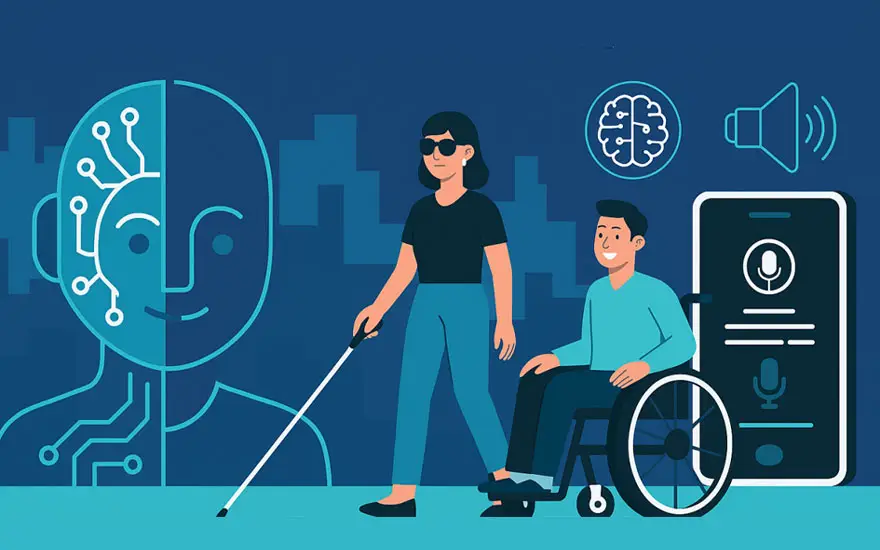
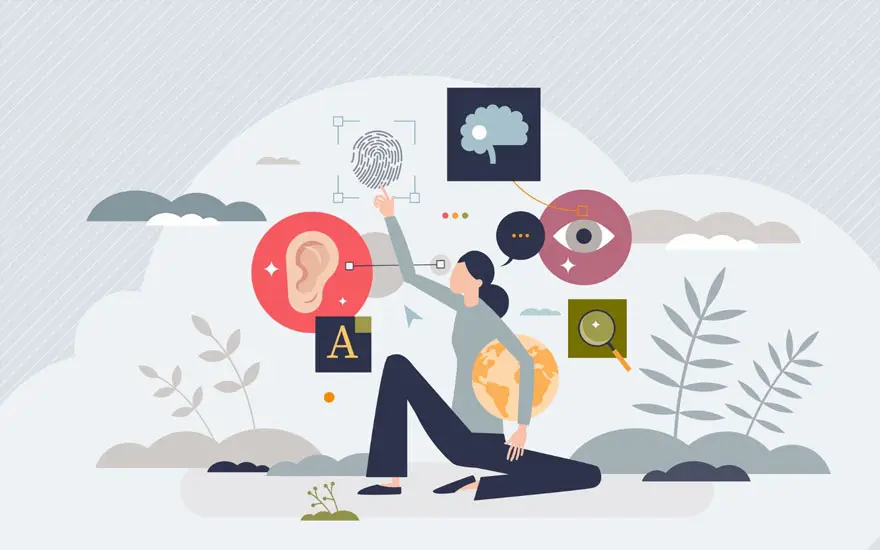
The first edge of this sword represents a new era of independence that was once unimaginable. In 2026, the assistive nature of technology has evolved into augmentative intelligence. We are no longer just building tools that help people cope with a world not designed for them; we are building systems that adapt the world to the individual in real-time. The most visible victory has been in the field of sensory augmentation. Modern AI models have moved beyond simple object recognition to sophisticated multimodal environmental narratives. For a visually impaired individual, a wearable device no longer just identifies a chair; it explains that there is an empty mahogany chair three feet to the left, positioned near a window with bright afternoon sun. This level of nuance allows for a spatial confidence that previously required human assistance, granting users the agency to navigate complex public spaces with dignity and speed.
Furthermore, the revolution in communication through Augmentative and Alternative Communication (AAC) has undergone a radical transformation. Traditional devices often required slow, laborious manual input that lagged behind the pace of natural conversation. Today, AI-powered AAC systems use context-aware prediction to bridge this gap. By analysing a user’s location, the time of day, and previous conversation patterns, these devices can predict intent with startling accuracy. For non-verbal individuals or those with non-standard speech patterns, such as those resulting from cerebral palsy, ALS, or stroke, AI acts as a real-time neural translator. It turns unique vocalisations into clear, synthetic speech that retains the user’s intended emotional inflexion, ensuring that their personality is not lost in the process of digitisation.
In the educational sphere, AI has become the ultimate cognitive ramp, particularly for neurodivergent learners. For students with ADHD, dyslexia, or autism, generative AI acts as a personalised tutor that can instantly restructure information. It can distil a dense, fifty-page academic paper into a series of interactive checklists or a simplified plain language summary, directly addressing the executive function challenges that often hinder academic success. Tools like the Vanderbilt Planning Assistant now scan entire course syllabi to automatically break down massive semester projects into manageable daily micro-tasks. This level of automated organisation allows students to focus on the content of their education rather than the administrative burden of managing it, effectively levelling the playing field in higher education and competitive professional environments.
However, the second edge of this sword the hidden risks of the algorithm is equally sharp and potentially dangerous. The most immediate concern in 2026 is the accuracy gap, often referred to as AI hallucinations. While a factual error might be a minor nuisance for a typical user, it can be life-threatening in a disability context. If an AI incorrectly identifies a medication dosage on a bottle due to a reflective label or misinterprets a Don’t Walk sign during a software glitch, the physical stakes are absolute. The industry is currently struggling to balance the creative speed of generative models with the 100% accuracy required for safety-critical assistive tasks. This has led to a surge in AI confidence litigation, where users are demanding that developers be held liable for the physical consequences of algorithmic errors.
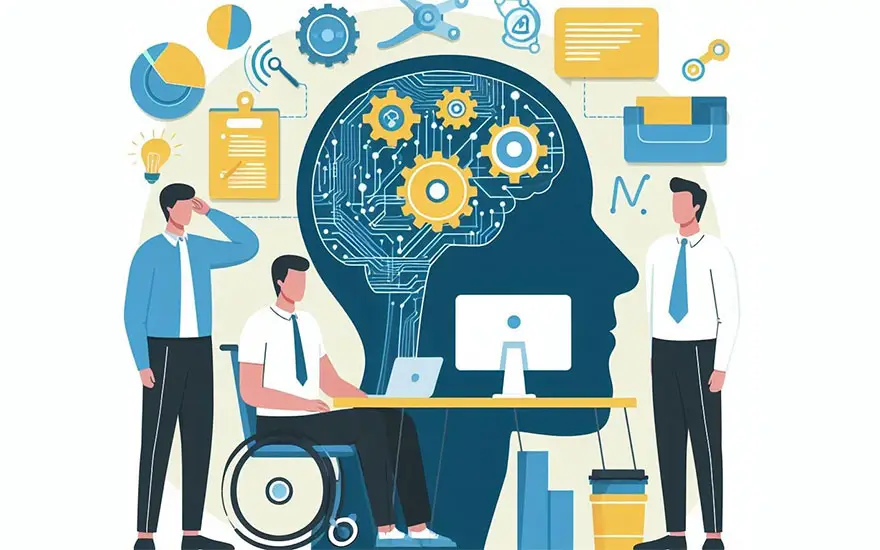
Beyond physical safety, there is the insidious risk of algorithmic discrimination against statistical outliers. Because most AI models are trained on the majority of data, the speech, movement, and writing patterns of the neurotypical and able-bodied people with disabilities are often excluded from the foundational training sets. This creates a phenomenon known as digital redlining. In the workforce, AI-driven recruitment tools often flag non-standard eye contact or unusual facial expressions as signs of low confidence or dishonesty, effectively filtering out qualified autistic candidates before they ever speak to a human. Similarly, security barriers like Liveness Tests for banking often require specific head movements that individuals with motor disabilities cannot perform, inadvertently locking them out of the modern digital economy.
The privacy paradox further complicates this landscape. To work effectively, assistive AI requires an intimate level of data: recordings of private conversations to train speech models, eye-tracking patterns to navigate interfaces, and biometric health markers to predict fatigue or seizures. This creates a privacy tax for the disabled community; to gain a basic level of independence, users must often surrender a volume of personal data that would be considered an unthinkable intrusion for others. As we navigate 2026, the question remains whether we can have highly personalised AI without creating a permanent, high-resolution surveillance state for the most vulnerable members of society.
This tension has sparked a global regulatory movement, marking 2026 as a historical turning point for Crip Tech technology designed by and for the disabled. New frameworks, such as the enforcement of the EU AI Act and the updated ADA Title II rulings in the United States, have established that accessibility is not a premium feature but a fundamental civil right. We are seeing a shift toward Inclusive Design by Default, where developers are mandated to use representative datasets that specifically include non-standard speech and motor patterns during the initial training of their models. This ensures that the technology is built to recognise the full spectrum of human diversity from day one, rather than being patched with accessibility features as an afterthought.
In conclusion, the dual-edged sword of AI in assistive technology is neither inherently good nor evil; its impact is determined entirely by the hands that forge the algorithms and the data that feeds them. As we move deeper into this decade, the goal is not to dull the sword we need its sharpness to cut through the physical and social barriers that have historically marginalised the disabled community. Instead, we must build a more robust framework of human-centric design, diverse data representation, and ironclad privacy protections. The true measure of AI’s success will not be found in how well it helps the average person do things faster, but in how it empowers those on the margins to do things they never thought possible.