
Introduction
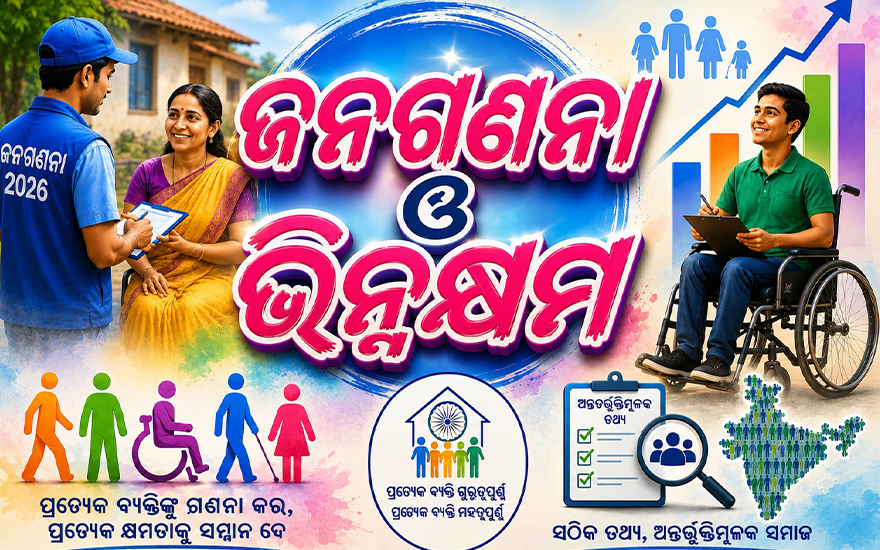
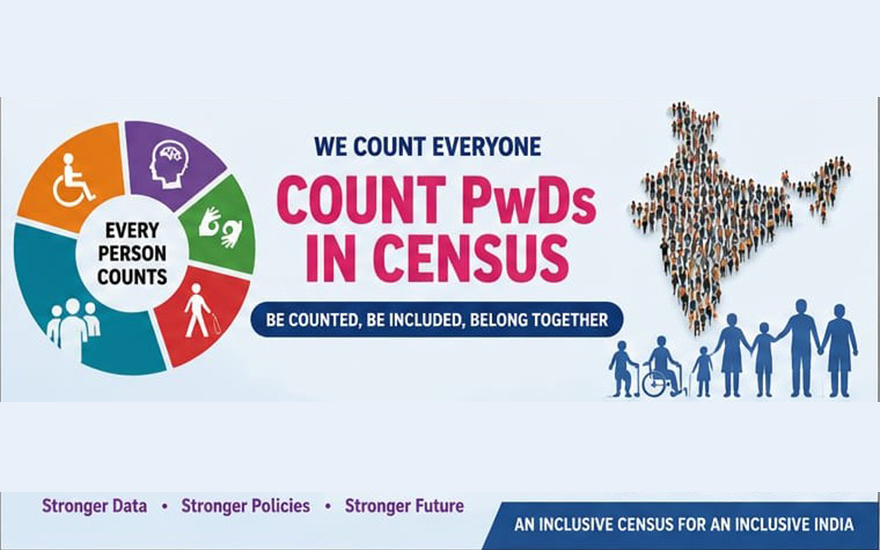
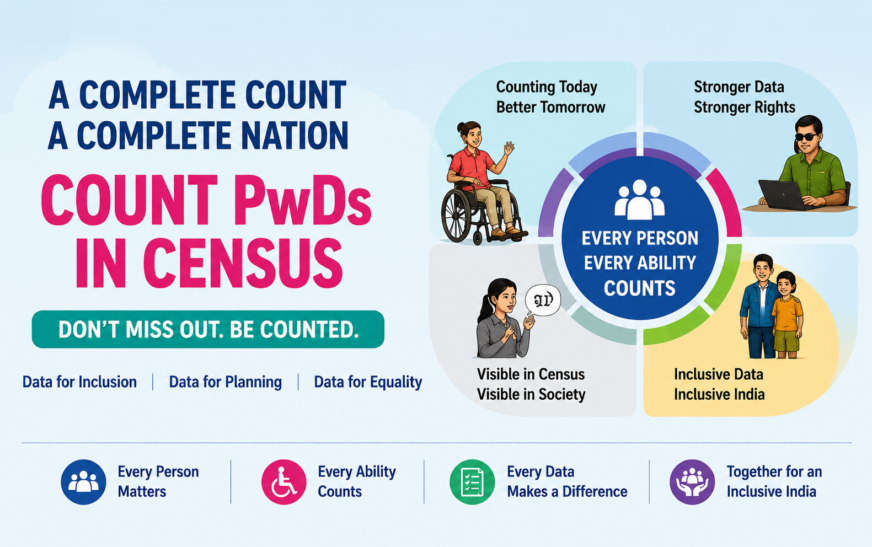
A census is much more than a population count. It is the foundation for evidence-based governance, determining how governments allocate resources, plan infrastructure, design welfare programmes, and monitor progress towards the Sustainable Development Goals (Registrar General & Census Commissioner of India, 2011). Every number in the census represents a human life; every omission represents an invisible citizen.
For India’s millions of persons with disabilities, the Census is particularly significant. It determines how many accessible schools are needed, where rehabilitation centres should be established, how many sign language interpreters and special educators are required, how disability pensions are budgeted, and how emergency response systems are planned. Yet disability has historically remained one of the weakest areas of census data collection in India, resulting in millions of people remaining statistically—and consequently socially—invisible (Registrar General & Census Commissioner of India, 2011).
Disability in India’s Census: Progress and Gaps
Following sustained advocacy by disability rights organisations, disability was reintroduced into the Census in 2001 after being omitted in 1991. The 2011 Census represented an improvement by recognising eight disability categories and reported 26.8 million persons with disabilities, representing 2.21% of India’s population. It also found that nearly 69% of persons with disabilities lived in rural areas, while visual impairment was the most commonly reported disability (Registrar General & Census Commissioner of India, 2011).
Despite this progress, the figure has been widely regarded as a significant underestimate. The World Health Organization (WHO) estimates that approximately 16% of the global population experiences some form of disability (World Health Organization, 2023). Although differences in definitions account for some variation, India’s reported prevalence remains exceptionally low. With increasing life expectancy, rising rates of diabetes, stroke, road traffic injuries, neurological disorders, and cancer survival, disability prevalence in India is expected to be substantially higher than reflected in official Census data (IHME, 2024).
Why Does Disability Continue to be Undercounted?
Several factors contribute to this persistent underestimation.
The first is social stigma. Many families are reluctant to disclose disability due to fear of discrimination, social exclusion, or concerns about marriage prospects, particularly for girls and women.
Secondly, public understanding of disability often remains limited to visible impairments. Conditions such as autism, intellectual disabilities, psychosocial disabilities, specific learning disabilities, dementia, Parkinson’s disease, and multiple sclerosis frequently go unrecognised or unreported.
A third challenge is inadequate enumerator training. Census enumerators often depend on responses from the head of the household rather than speaking directly to the individual concerned. Mild or invisible disabilities may therefore be overlooked or incorrectly classified.
Perhaps the most significant limitation lies in the way disability is measured. Traditional census questionnaires ask a simple binary question – whether a person is “disabled.” International evidence shows that people respond much more accurately when asked about functional difficulties, such as whether they have difficulty seeing, hearing, walking, remembering, communicating, or performing self-care, rather than whether they identify themselves as disabled (Washington Group on Disability Statistics, 2023).
Global Good Practices
Many countries have adopted the Washington Group Short Set of Questions, developed specifically to improve disability measurement in censuses and household surveys. These questions assess functional limitations rather than medical diagnoses and have now been adopted or adapted by over 100 countries (Washington Group on Disability Statistics, 2023).
Countries such as Australia, Canada, Brazil, Mexico, Kenya, Uganda, the United Kingdom, and the United States use functional approaches to disability measurement. In Kenya, disability-inclusive data collection has strengthened humanitarian planning by identifying individuals requiring evacuation support, assistive devices, and accessible relief during disasters. In the United States, disability information collected through the American Community Survey guides allocation of federal funding, while the United Kingdom uses disability data extensively for employment, education, and accessibility policies.
Why Better Disability Data Matters
Reliable disability statistics influence every aspect of governance.
In education, undercounting means fewer resource teachers, accessible classrooms, Braille books, assistive technologies, and therapy services. If a district reports only 500 children with disabilities when the actual number is 2,500, thousands of children are denied educational opportunities.
In healthcare, poor data results in inadequate investment in rehabilitation services, physiotherapy, occupational therapy, speech therapy, audiology, mental health care, and assistive devices.
The Rights of Persons with Disabilities (RPwD) Act, 2016 mandates 4% reservation in government employment and 5% reservation in higher education. However, effective implementation requires accurate estimates of persons with disabilities across age groups and regions (Government of India, 2016).
Disability data are equally critical for women, older persons, and disaster preparedness. Odisha’s experience during Cyclone Fani (2019) demonstrated that identifying persons with disabilities before disasters enables timely evacuation, continuity of medication, and accessible relief distribution. Similarly, the COVID-19 pandemic exposed major gaps when governments struggled to identify persons requiring home-based rehabilitation, accessible vaccination, and caregiver support.
A Law Ahead of the Data
ndia’s disability rights framework has evolved considerably. The Rights of Persons with Disabilities Act, 2016 expanded legal recognition from seven to 21 categories of disability, including autism spectrum disorder, specific learning disabilities, Parkinson’s disease, multiple sclerosis, blood disorders, and acid attack survivors (Government of India, 2016).
However, the last Census predates this legislation. Consequently, India’s principal database on disability still reflects an outdated classification system, creating a disconnect between law, policy, budgeting, and implementation. The forthcoming Census therefore provides a historic opportunity to align disability enumeration with the current legal framework.
Updating the Census to reflect the categories recognised under the RPwD Act is not merely a technical exercise; it is essential for evidence-based governance and inclusive development. Accurate, disaggregated data will enable governments to estimate the true prevalence of different disabilities, identify regional disparities, allocate resources more equitably, and design targeted interventions in education, healthcare, employment, social protection, accessibility, and disaster risk reduction. It will also strengthen India’s ability to monitor the implementation of the RPwD Act, fulfil its commitments under the United Nations Convention on the Rights of Persons with Disabilities (UNCRPD), and measure progress towards the Sustainable Development Goals (SDGs), ensuring that no person with disability remains invisible in national planning.
Civil Society’s Contribution
The inclusion and improvement of disability questions in India’s Census did not happen automatically. It was achieved through sustained advocacy by organisations of persons with disabilities.
The National Disability Network (NDN), under the leadership of the late Javed Abidi and coordinated by the National Centre for Promotion of Employment for Disabled People (NCPEDP), played a pioneering role in advocating for disability-inclusive policies, accessibility, electoral participation, and improved census enumeration.
In Odisha, the Odisha State disAbility Network (OSdN), facilitated by Swabhiman, conducted extensive awareness campaigns before the 2011 Census, mobilising communities, disability organisations, parents’ groups, and government officials. As a result, Odisha reported a disability prevalence of 2.9%, substantially higher than the national average of 2.21%, demonstrating that awareness and community participation significantly improve reporting.
The Way Forward
India’s ongoing Census presents a once-in-a-decade opportunity to strengthen disability statistics. The Census should align with the RPwD Act by recognising all 21 disability categories while also adopting internationally accepted functional questions such as the Washington Group Short Set. Enumerators should receive comprehensive disability sensitisation training, and census materials should be made available in Braille, sign language, Easy Read, and accessible digital formats. Most importantly, organisations of persons with disabilities should be actively involved in planning, implementation, monitoring, and public awareness.
An inclusive Census is not merely about statistics; it is about recognising citizenship, ensuring equitable distribution of public resources, strengthening evidence-based policymaking, and fulfilling India’s obligations under the United Nations Convention on the Rights of Persons with Disabilities (United Nations, 2006). As India prepares for the next decade of development, one principle should guide every Census exercise: Every person counts. Every disability counts. Every citizen counts.
Dr. Sruti Mohapatra
Founder and CEO, Swabhiman, Bhubaneswar
State Steering Committee Member, SCF, S&ME, GoO
Member, National Council of Teacher Education (NCTE), ME, GoI
Vice Chair, Commonwealth Disabled People’s Forum (CDPF), London
Vice Chair, Disabled People’s International-India (Consultative Status UN)
TEDx Speaker (5+) and Winner of 81+ awards
2022 Nari Shakti Purashkar by President of India