Introduction
India’s democratic ethos rests on the principle of equality. Every citizen, regardless of caste, gender, religion, or ability, is entitled to participate in the political process. Yet, when it comes to persons with disabilities (PwDs), the promise of inclusion often collapses under the weight of tokenism, bureaucratic apathy, and social prejudice. Odisha, a state with a rich cultural heritage and a vibrant political landscape, offers a telling microcosm of this national paradox.
While laws and policies proclaim lofty commitments, the lived experience of PwDs in Odisha and across India reveals a democracy that is still hesitant to embrace them as equal political actors.
Constitutional and Legal Framework: Rights on Paper
The Indian Constitution guarantees equality before law (Article 14), prohibits discrimination (Article 15), and ensures the right to life with dignity (Article 21). Universal adult suffrage under Articles 325 and 326 includes PwDs without exception.
The Rights of Persons with Disabilities Act, 2016 (RPwD Act) mandates equal participation in political and public life. Section 11 specifically directs governments to ensure PwDs can exercise their voting rights and access polling stations.
Odisha has also adopted state-level schemes for disability pensions, education, and employment. Yet, the critical flaw lies in implementation. For instance, certain pension eligibility criteria often exclude those with less than 80% disability, leaving thousands unsupported. This selective approach undermines the very spirit of inclusion.
Voting Rights: Accessibility or Symbolism?
The Election Commission of India (ECI) has introduced measures such as ramps, wheelchairs, Braille-enabled EVMs, and companion assistance. Odisha too has attempted to make polling stations more accessible.
But reality paints a harsher picture:
• Rural Polling Stations: Many remain inaccessible, lacking ramps or basic facilities.
• Transport Barriers: PwDs often struggle to reach polling booths due to inadequate public transport.
• Information Gaps: Voter awareness campaigns rarely use accessible formats like sign language or easy-to-read materials.
In Odisha’s villages, PwDs frequently depend on family members to physically carry them to polling stations. This is not empowerment; it is survival. The irony is stark – while India celebrates its technological prowess, it fails to ensure that millions of PwDs can cast their vote independently and with dignity.
Representation in Political Institutions: The Silent Absence
Voting is only one dimension of inclusion. Representation in legislatures and political parties is equally critical. Here, Odisha and India both falter.
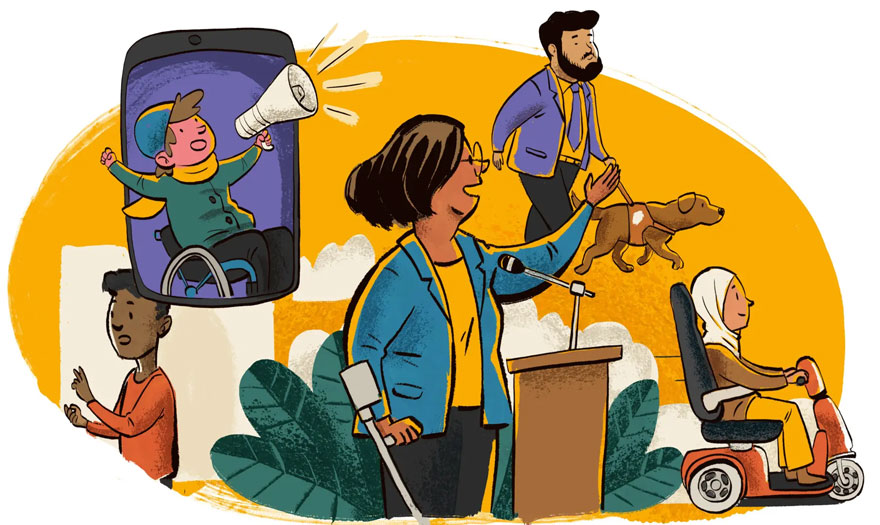
Unlike women or Scheduled Castes/Tribes, PwDs have no reserved seats in Parliament or State Assemblies. Political parties rarely field PwD candidates. In Odisha, despite a strong civil society movement around disability rights, PwDs remain largely absent from mainstream politics.
This absence has consequences. Policies are drafted “for” PwDs rather than “with” them, leading to paternalistic approaches that reinforce dependency. Without PwDs at the decision-making table, their lived experiences remain invisible in governance.
Policy and Governance: Welfare Over Rights
India and Odisha have introduced several schemes for PwDs – disability pensions, reservations in education and employment, and accessibility campaigns. Yet, these initiatives often suffer from poor implementation and exclusionary criteria.
Odisha’s pension scheme, for example, restricts eligibility to receive the promised monthly Rs 3500/ only to those with 80% or more disability. This arbitrary threshold excludes thousands who face daily challenges but are deemed “not disabled enough” by bureaucratic standards.
The critical flaw lies in the framing: disability is treated as a welfare issue, not a rights issue. PwDs are seen as beneficiaries of charity rather than equal citizens entitled to representation. This mindset perpetuates exclusion and undermines democratic ideals.
Social and Cultural Barriers: Stigma as a Political Weapon
Beyond legal and institutional gaps, social attitudes remain a formidable barrier. PwDs are often perceived as dependent, incapable of leadership, or objects of pity. Families may discourage political participation, fearing ridicule. Communities may not accept PwDs as legitimate leaders.
In Odisha, cultural narratives often portray PwDs as “destined sufferers” rather than empowered citizens. Media representation compounds the problem, portraying PwDs as inspirational “overcomers” or helpless victims, rarely as political actors demanding rights.
Until society shifts from sympathy to respect, PwDs will continue to be marginalized in political life.
Odisha as a Case Study: Contradictions in Practice
Odisha presents a telling case study. On one hand, the state hosts vibrant disability rights movements and cultural festivals that celebrate inclusion. On the other, its political institutions remain largely indifferent to PwD representation.
• Manifesto Promises: Parties often promise pensions or welfare schemes for PwDs during elections. Yet, after winning, they dilute or restrict eligibility.
• Local Governance: Panchayats rarely include PwDs in leadership roles, despite their significant presence in rural communities.
• Civil Society vs State: NGOs and activists in Odisha have pushed for greater inclusion, but state policies remain slow, selective, and often symbolic.
This contradiction – between rhetoric and reality – exposes the fragility of political inclusion in Odisha and India at large.
Global Lessons: India’s Missed Opportunities
Internationally, several countries have taken stronger measures. The United States enforces strict accessibility standards in elections. Some nations reserve seats for PwDs in legislatures. The United Nations Convention on the Rights of Persons with Disabilities (UNCRPD), ratified by India in 2007, emphasizes full participation in political and public life.
India’s compliance with UNCRPD remains superficial. While ratification was swift, implementation has been sluggish. Reserved seats, mandatory accessibility audits, and disability-inclusive leadership programs are conspicuously absent. Odisha, despite its progressive civil society, has not pioneered any structural reforms in this regard.
The Way Forward: From Tokenism to Transformation
Political inclusion of PwDs in Odisha and India requires more than symbolic gestures. It demands structural reforms and attitudinal change.
1. Reserved Representation: Introduce quotas for PwDs in local bodies, Assemblies, and Parliament.
2. Mandatory Accessibility: Enforce accessibility standards at every polling station, with penalties for non-compliance.
3. Party-Level Reforms: Political parties must field PwD candidates and integrate disability rights into manifestos.
4. Capacity Building: Invest in leadership training for PwDs to prepare them for governance roles.
5. Awareness Campaigns: Shift narratives from charity to rights, highlighting PwDs as leaders.
6. Technology Integration: Expand assistive technologies in voting and campaigning.
7. Grassroots Mobilization: Strengthen disability organizations to demand accountability and representation.
Conclusion
India’s democracy cannot claim to be inclusive while millions of PwDs remain marginalized in political life. Odisha, with its vibrant civil society and cultural pride, has the potential to lead by example – but only if it moves beyond welfare schemes and embraces structural reforms.
The Constitution and RPwD Act promise equality, but practice reveals tokenism, neglect, and systemic exclusion. Political inclusion is not about ramps at polling stations or pensions – it is about ensuring PwDs are recognized as equal citizens, leaders, and policymakers.
Until we move beyond charity and symbolism, our democracy will remain incomplete. The challenge is clear: will our system continue to treat PwDs as passive beneficiaries, or will they finally embrace them as active architects of India’s democratic future?
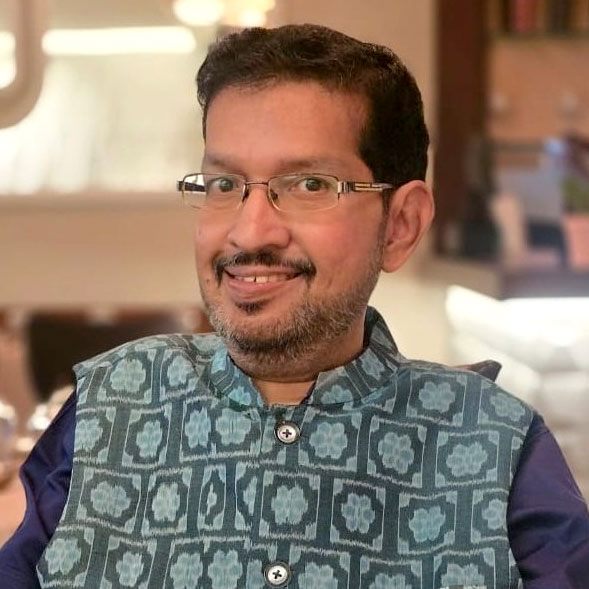
Jitendra Kumar Biswal
Disability Rights Activist
State Coordinator, appointed by the Election Commission of India for accessible elections in 2019.
Chairman Odisha PCC Disability Cell.
First Ever Quadriplegic Actor in Cine World.
State Awardee Cine Actor
Chairperson DHWANI International Film Fest