Every five years, India holds the world’s largest democratic exercise. Hundreds of millions vote. Parties spend thousands of crores. Promises fill the air like monsoon clouds. And yet, for 26 million disabled Indians election season arrives and leaves like a bus that never stops at their corner. They vote. Nobody campaigns for them. Nobody campaigns to them. They are the largest constituency that no party has ever bothered to court.
This is no small oversight. This is a pattern. This tells us something truly disturbing about who Indian democracy thinks it is really for.
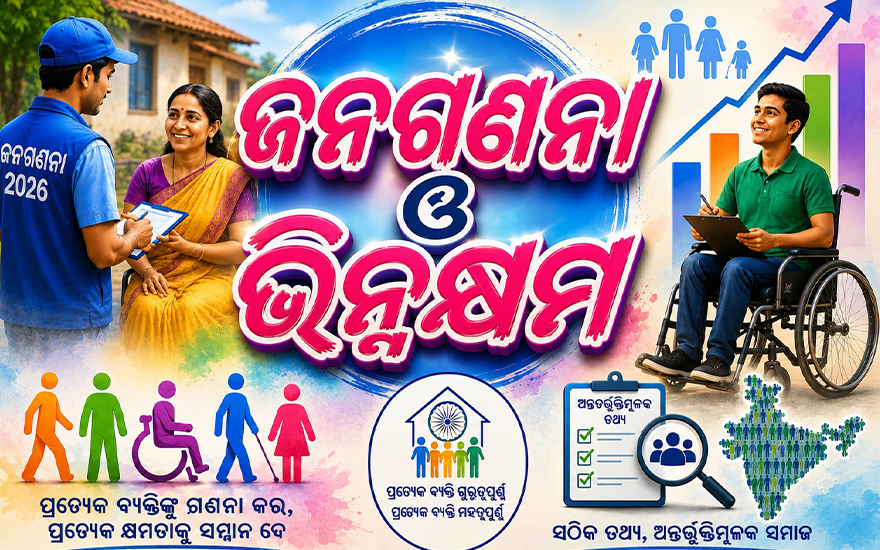
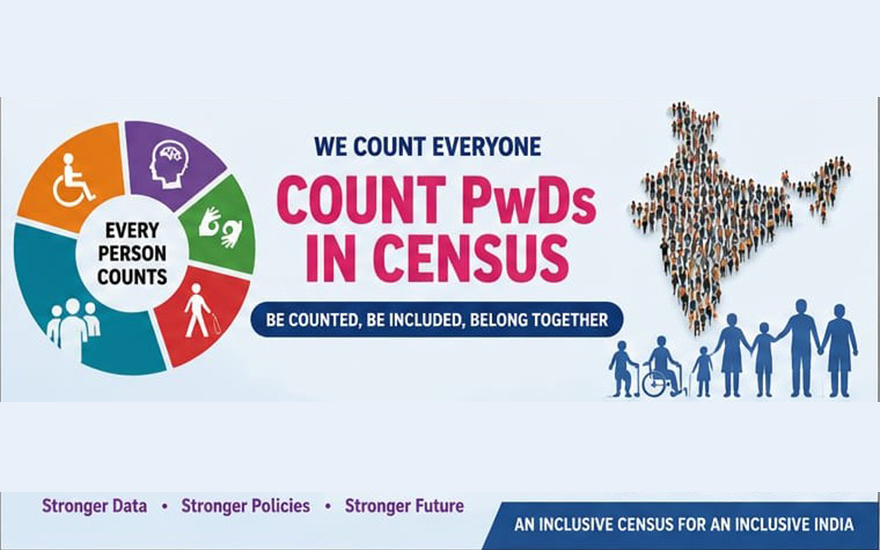
2011 census recorded 2.68 crore disabled people. Experts widely agree this figure is a significant underestimate-millions remain invisible due to stigma, survey limitations, or ignorance that their condition merits official recognition. Even by official count alone, this represents a vote bank larger than the combined population of several Indian states. This is a number which, in almost any other context, would trigger parties scrambling to shower promises upon us. Yet disability barely features in India’s political discourse. The question remains: why?
Flip open the last three general election manifestos of the major parties and do a text search for the term “disability.” Should you find it, you’ll discover it buried somewhere between agricultural subsidies and infrastructure targets-a single sentence that carefully hints at a promise without actually saying much at all: “We are committed to the welfare of our differently-abled brethren.” This usually ends where the discourse on disability finishes. There are no policy details. There are no deadlines. There is no budgetary allocation. There is no acknowledgement that the disabled are interested in jobs, education, mobility and active civic life not just an allowance and a free wheelchair.
Indian politics has, till date, viewed the disabled through the narrow lens of receiving state charity. The welfare model of disability posits the disabled as victims to be managed through welfare schemes, viewing them as a burden society has to support. This is a paternalistic, outdated and convenient way to look at the disabled because, unlike rights, welfare requires nothing other than gratitude and support from the disabled themselves. Giving someone a pension implies they should feel thankful; a right implies you are responsible for delivery.
While the Rights of Persons with Disabilities Act (2016), a major leap legislatively that widened the definition of disability from seven to 21 categories and proposed provisions for job reservations for the disabled (4%) and accessible public spaces, holds promise, eight years later, implementation is far from seamless. Government bodies continue to leave job quotas unfilled. Accessible transport and infrastructure are a distant dream for many Indian villages and urban centers. Moreover, in the eight years that have passed – with two national and countless regional elections – the implementation of the law has barely merited a mention on any major party platform. The law exists. The intention to implement it seems, however, lacking.
This silence on disability becomes even more stark when one considers that voting, the very essence of democracy, remains largely inaccessible to a large part of the disabled Indian population. Polling booths that do not have ramps; EVMs out of reach for wheelchair users; a lack of Braille ballots for the blind; no sign language interpreters for deaf citizens. Voter registration processes assumes that every citizen can walk, see, hear and write without difficulty. Despite a few recent attempts to make elections more accessible with model booths in certain regions, these provisions are yet to become the norm in India’s more than one million polling stations. What message is sent to a disabled citizen when the most fundamental aspect of participation requires them to beg for help or abandon the process altogether ?
As Javed Abidi, the veteran disability rights activist stated: “We are not a burden on society. We are citizens burdened by inaccessible systems.” This distinction-that disabled people are not a burden; systems are the burden-is one that India’s political landscape has, till now, completely ignored. Parties continue to view the disabled with compassion as, once again, one might do to a flood victim, providing them with relief and handouts, viewing their disability as placing them outside the normal cycle of civic life.
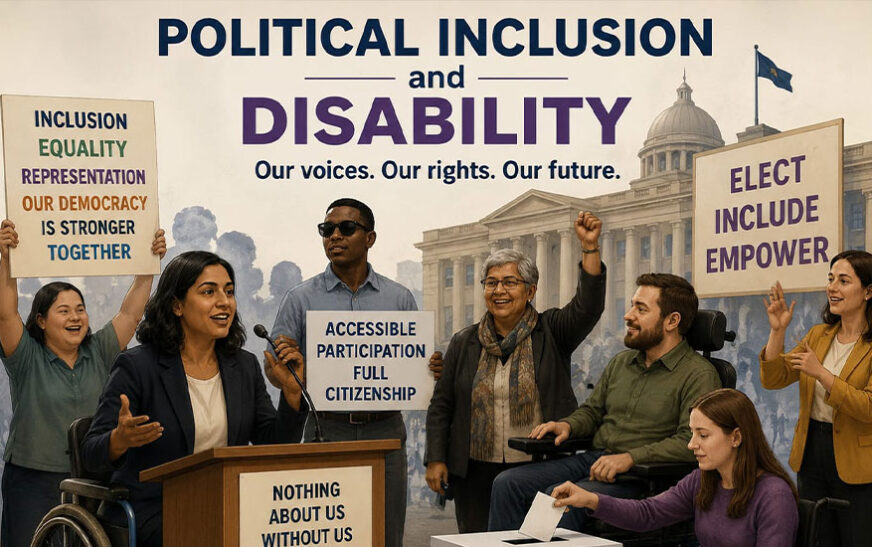
But the disabled are firmly within the normal cycle of civic life-they are voters, taxpayers, students, workers, parents and most importantly, citizens who have the same claim to this democracy as anyone else. The global slogan for the disability rights movement captures this accurately: Nothing about us, without us. In India’s parliaments and state assemblies, disabled people are almost entirely absent as representatives, with the caveat of job reservation for the disabled also being largely unused, and the parties not risking to put disabled candidates forth, seemingly believing their elections are a guaranteed loss. Laws are passed, policies and budgets finalized-without input from those who are personally acquainted with broken footpaths on wheelchairs, with the struggles of getting through a court hearing without adequate support for hearing impairments, or with the sheer inconvenience of trying to catch a lesson with teachers who write too small.
This exclusion is self-perpetuating. Without disabled representation in decision-making bodies, the specific needs of the disabled do not come up for consideration. When these needs are not a concern, there is little electoral incentive for parties to cater to them, making the disabled feel that their vote counts for little and causing a degree of detachment and apathy. This system effectively creates and then rationalizes its own invisibility by pointing to the lack of presence to further justify not addressing the problem.
What could change if India’s parties took the initiative? The demands are not unreasonable. Manifestos should include concrete proposals: the number of accessible schools and centers to be built, the plan for fulfilling the 4% job reservation, making public transport accessible for all people with mobility issues. The Election Commission needs to prioritize making voting accessible for all citizens, not just as an experimental module. Parties should believe in the voters and allow disabled people to make a political impact.
None of this involves reinventing democracy. It involves completing it – honestly, comprehensively, and unreservedly, for people who were voting in it anyway, unseen. Democracy, when it is at its best, is a mirror reflecting who society thinks is important. Right now, India’s electoral mirror has a blind spot the size of a continent. Twent-six million voters are voting and waiting and watching-for the election where someone will meet their eyes, look, and speak to their lives, not history. That election has not arrived yet, but it is late.
India is the world’s largest democracy. Let’s make sure it’s also an accessible one.