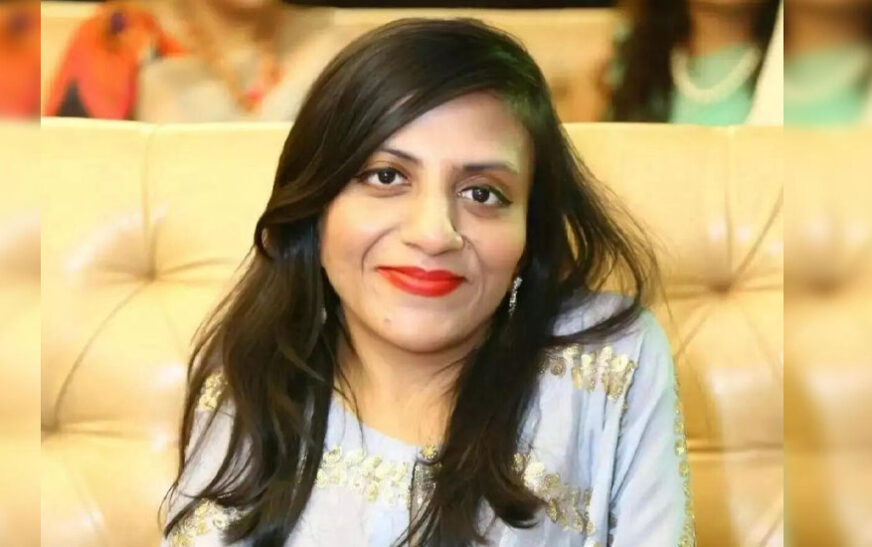
Her UPSC journey itself is a compelling story of discrimination, dedication, and excellence. Even after almost a decade, her remarkable trajectory continues to inspire countless UPSC aspirants and young people, proving that physical limitations cannot hinder determination and success. Yes, she is none other than Ira Singhal, a living symbol of the spirit “Yes, I can.” She became the first differently abled woman to secure All India Rank 1 in the UPSC Civil Services Examination in 2014. Her inspirational journey has always been a great source of motivation.
In a candid telephonic interview with Dr. Biraja Routray, Chief Editor of PUNARBASA SAMACHAR, she highlights the underlying gap between realism and idealism in the implementation of the Rights of Persons with Disabilities Act, 2016.
Q1. You are the first woman with disability to top the Civil Services Examination in 2014. Your story itself is an epitome of perseverance and strong determination. Being an individual with physical challenges and securing the highest rank in one of the toughest examinations conducted by the UPSC was truly extraordinary. How would you like to remember this dismantling journey of stereotypes after the passage of a decade?
Ans. I think, not for myself, but I would like all other parents who don’t think their children, you know, continue to focus on the disability of their children. I would like them to remember that your child’s disability does not define you. There is so much more, and you need to focus on their abilities. And if you focus on their abilities, your child can also make a contribution to the world around you. And so, it’s not for me. It’s not about myself. It’s about, I want other people and other parents especially to remember that their children also have abilities. You know, just because the child has a disability does not mean the child has no abilities.
Q2. Your humongous success story has infused a sense of possibility among many young aspirants with different types of disabilities. However, your journey was much tougher than that of today’s aspirants, as it was before the enactment of the RPwD Act, 2016. To what extent has this apex examination system become more accommodative for PwD candidates with different impairments in the meantime?
Ans. Firstly, with the coming of the new Act, a lot many more kinds of disability have been recognised. Secondly, the number of jobs who have recently been opened that has increased manifold. So earlier, only a few jobs were being allowed for persons with disability in the country because for PwD, you must have the job identified for them. So that number has gone up manifold. So now, a lot many more people can actually come up. And I think the societal perception has also improved. So now people are more willing to have persons with disability and to look beyond their disabilities. Earlier the biggest problem was if you had a disability, nobody was willing to even think of your ability. You know? So that is I think what has changed that today people are a lot more willing to give a chance. Not everybody of course, but still the number has gone up manifold.
Q3. It is a reality that, despite reservation provisions, the presence of PwD candidates in top national-level jobs is still not satisfactory. What reasons do you think are responsible for this, and how can the situation be addressed?
Ans. The biggest problem is that currently physical accessibility still does not exist. You know? And a lot of times we restrict physical accessibility. Of people with visual impairment, people with hearing impairment, there is a lot more accessibility that needs to be built in. So, what is happening is people with disabilities who are more disabled are still not able to go out and actually participate in the world because the physical environment is still not made accessible. It’s done in a lot of Western countries, but in India, we are still struggling with the physical environment. So, if the child cannot go to college, there are so many universities that still reject children saying that we cannot shift classes to the ground floor. A lot of courses are barred for children with visual impairment. For a hearing impairment child to really participate in a class, it’s almost impossible still. So, all these factors at higher education level are restricting the number of opportunities that children can then obtain at employment levels. So, what is happening is that for people with lesser degree of impairment, they are able to get those opportunities, but those with higher degree of impairment are still out of the system, are still not able to reach those places.
Q4. The very perception of the system and society still lacks confidence in the abilities of an administrator having one or multiple disabilities. One of the obvious reasons is the absence of reasonable accommodation for officers belonging to the State or Central Cadre. Do you agree with this?
Ans. Yes…Yes… largely. The reasonable accommodations in offices on ground level still does not exist.
Q5. You have already served as a brand ambassador for disability empowerment initiatives of the Government of India. How do you find that our system has become more accessible and inclusive in delivering good governance?
Ans. So what is governance, like I said, a lot many jobs came up, right? Then not many more jobs were identified, almost 3,000 new job roles were identified. So that means that now if somebody can become a physics professor, a person with a disability of a certain type, it doesn’t mean just one physics professor job. It means all the physics professor jobs in the country, right? So that identification has opened up lots and lots, lots of jobs. But like I said, the problem is, that policy level, there’s not that exist, but it’s the implementation of that policy which is still lacking. And especially at the state level. States are still not sensitized, states are still not focusing and, you know, giving all provisions to persons with disability, even as per the government of India’s regulations and rules. So, for example, like we say, physical accessibility is still a huge, huge, huge problem. So those kinds of things still exist.
Q6. What mantra of success would you like to share with aspirants who dare to dream big despite one or more disabilities?
Ans. I think first, the fact that you are dare to dream is that you have taken the first step. But then you should also be honest about your own abilities. And that doesn’t mean that decide that, oh, I can’t do this but make a proper plan after testing your abilities. What most people do is they… And then they make bad plans, and that’s why they fail. So, the reason you should be honest with yourself about your abilities is that be honest of who you are, what your capabilities are, and then make a plan according to that. So, if I’m somebody who cannot get up in the morning, then my plan needs to make sure that I stay up in the night and study, you know? So, it’s that, don’t overestimate yourself. Be very realistic about who you are and then make a plan according to your real abilities and your real interests and your real talents.