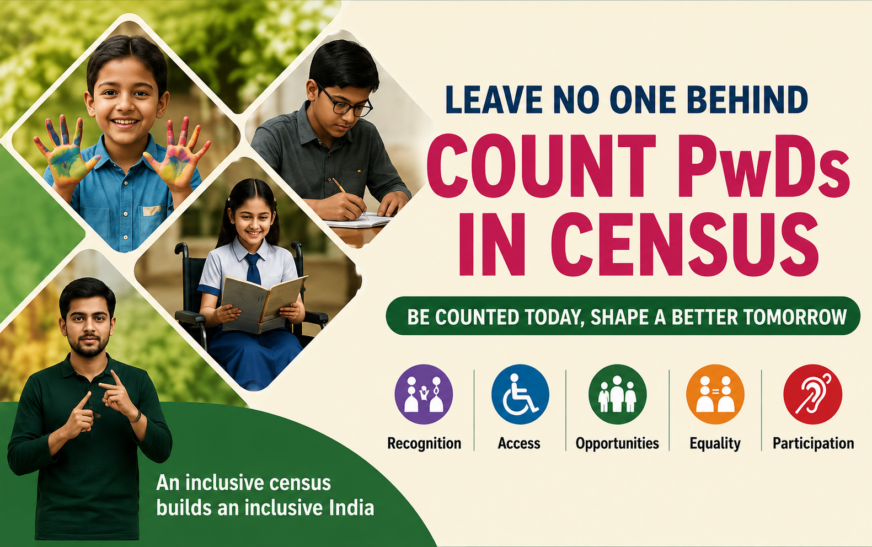
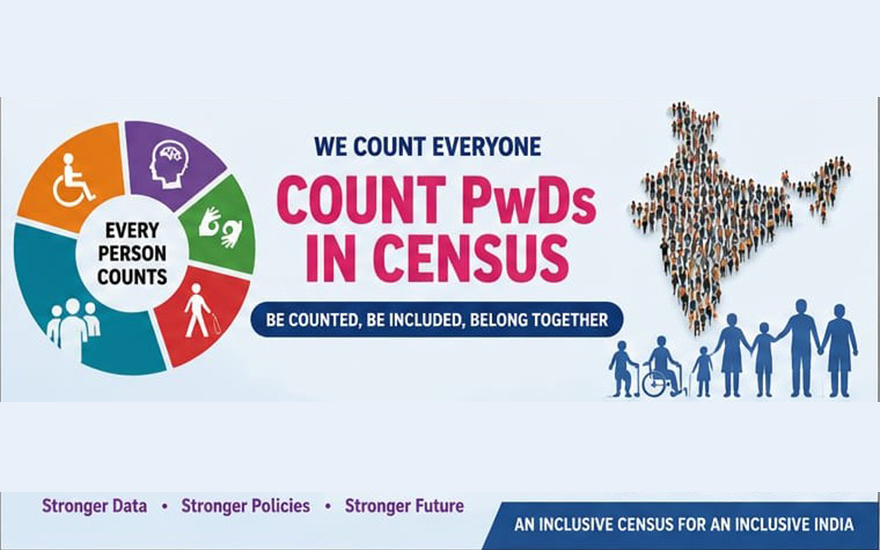
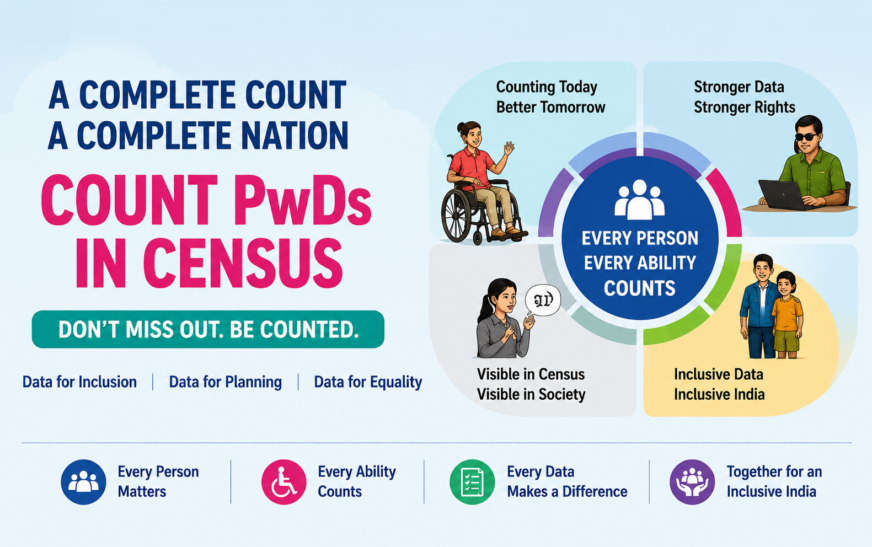
The 2011 census of India recorded that the number of persons with disabilities in India amounted to around 26.8 million people, which is about 2.21% of the total population . This is a substantial number, larger than the population of Australia. Yet disability rights advocates and researchers have long argued that this figure represents a severe undercount, symptomatic of deeper problems in how India measures its disabled population and serves them.
The Findings – 2011 Census
The disability data in the 2011 census was more methodologically rigorous than in previous rounds, with an expansion of the disability categories from five to eight. The resulting data offered a revealing, if partial, snapshot. Men accounted for 56 per cent of the recorded disabled population and women for 44 per cent. The education data was particularly sobering: only 61 per cent of disabled children aged between 5 and 19 were enrolled in school at the time, and half of children with intellectual disabilities never attended an educational institution at all. Similarly, literacy rates among disabled adults stood at just 55 per cent, compared to the higher rates for the general population. A wide gap was also observed between urban and rural disabled literacy rates.
The Undercount
Many independent estimates suggest that the number has been undercounted, as the actual percentage of disabled people is far higher than what was captured by the census. The World Health Organization’s global estimates from the same period put the number of visually impaired people in India at around 63 million, a figure that alone exceeds the census’s total disability count.
Several factors have driven this gap. One reason is that census enumerators are often overworked school teachers pressed into temporary service, who skip the disability questions altogether. Social stigma is another important factor: many households are reluctant to disclose a member’s disability, especially conditions like mental illness, out of fear of social exclusion. In addition, unlike the Washington Group approach, which asks questions about functional difficulty, India’s older style asks whether someone “is” disabled, framing a categorical question that tends to capture only the most severe cases.
Behind the Numbers
An analysis of the 2011 census exercise found that India deployed 2.7 million enumerators, mostly primary school teachers, whose training on disability consisted of no more than a brief handbook section, with no guidance on disability types. It should also be noted that these enumerators were evaluated on the number of forms they could complete rather than on accuracy, so disability questions may have been treated as a formality rather than approached with sensitivity.
One India-based study of caregivers of people with schizophrenia found higher levels of stigma, with many caregivers stating they felt uncomfortable disclosing a family member’s condition to others. This concealment was considered a survival strategy rather than denial, done not out of defiance but out of fear of social judgement.
These findings echo the lived assessments of disability rights advocates, several of whom have described India’s disability censuses in blunt terms: the 1991 census effectively ignored disabled people, and the 2011 census undercounted them.
Gap Matters
Undercounting disability is not a mere statistical gap. Census data feeds directly into how the government frames its policies. When the baseline is too low, funding and planning decisions inherit that distortion. This also affects visibility in national policy debates, as undercounting can lead to lower policy attention.
Bridging the Gap – Recommendations
To improve disability data collection, India should adopt the internationally validated Washington Group functional question set. Census enumerators should also receive targeted training to administer these sensitive questions consistently across diverse social contexts. A public awareness campaign should precede data collection, helping households understand how to respond accurately to the revised framing. The resulting data should be disaggregated at the district level and systematically integrated into policy planning, rather than remaining an isolated statistical exercise.
Conclusion
The manner of questioning determines whose life is ultimately reflected in policy. Narrow, medically framed questions render many individuals statistically invisible, while thoughtfully designed questions produce fuller and more honest answers. India today stands at a decisive juncture, with the opportunity to replace ambiguity with clarity — and a well-designed questionnaire carries the potential for substantial impact. Such recognition remains one of the essential first steps towards genuine social inclusion and belonging.