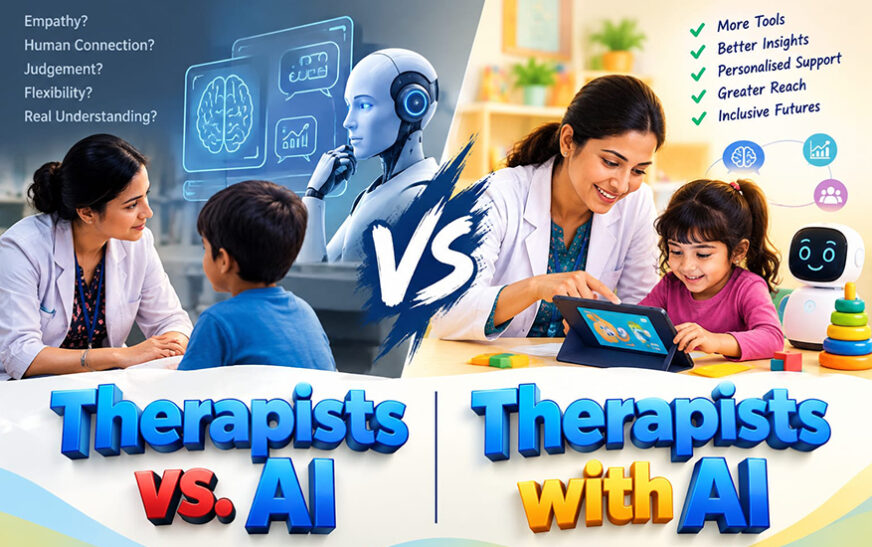
When we analyse the potential applications of AI in therapy, however, it becomes evident that the technology can provide a new dimension to these fields. AI can analyse enormous quantities of information, identify patterns, support personalized interventions, monitor progress, provide immediate feedback and assist therapists in making more informed clinical decisions.
AI could potentially assist therapists in a wide range of areas, including assessment and screening; movement and posture analysis; speech and language assessment; personalized exercise programmes; progress monitoring; cognitive and behavioural exercises; assistive mobility and communication; clinical documentation; clinical decision support; remote and homebased rehabilitation; predictive analytics; and professional education and skills development.
In this sense, AI can function as a supporting intelligence alongside the therapist, rather than necessarily functioning as a replacement for the therapist.
However, the apprehensions expressed by leading figures in the AI community also raise an important question about the future of human intervention in therapy. If AI systems become increasingly capable of observation, analysis, prediction and decision support, will AI eventually replace a significant part of the therapist’s role?
This question is particularly relevant in India, where rehabilitation practice remains predominantly human-centred and where many therapeutic interventions continue to rely heavily on manual supported by electrotherapy and experience-based approaches. At the same time, the rapidly expanding private education sector is producing large numbers of future rehabilitation professionals, but many educational institutions may not yet be adequately prepared to equip students with the technological literacy required for an AI enabled clinical environment. The availability of appropriately trained educators and technology-oriented clinical trainers is another significant challenge.
This does not mean that every present or future therapist needs to become a programmer or a machine operator. Rather, therapists need to develop AI literacy as an essential component of their future professional competence.
Future therapists should understand how to interpret AI-generated data, recognize the ethical implications of digital technologies, use technology-assisted assessment tools, understand privacy and cybersecurity, recognize the limitations and possible biases of algorithms, and critically evaluate AI-generated recommendations.
They must also understand one fundamental principle: AI can process data, recognize patterns and generate recommendations, but therapeutic intervention is ultimately about a person not merely a dataset.
The therapist therefore needs to remain the critical human decision-maker who understands the individual’s context, emotions, environment, family, aspirations and lived experience.
In the conclusion of this debate, we can say that humans are usually afraid of change because they fear the unknown. But the single greatest constant of history is that everything changes.
The future should therefore not necessarily be framed as “Therapists vs. AI.” A more constructive and human-centred vision would be “Therapists with AI.”