


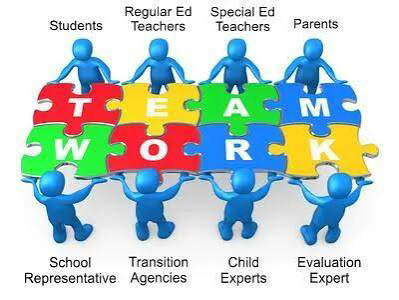
One thing I deeply respected about the American special-education system was the teamwork surrounding the child.
Students receiving special education services have an Individualized Education Program, or IEP, designed around their individual educational and functional needs. Parents are important members of the IEP team, and teachers, nurses, therapists, school professionals, and families work together to support the student.
My role as a nurse was only one part of that larger picture. The teacher understood how the student learned. The speech therapist understood communication. The occupational therapist worked on functional and daily-living skills. The physical therapist supported mobility. The psychologist and social worker helped with emotional and behavioural needs. And the parents knew their child in a way that nobody else could. I learned to respect every member of that team.
There was no question of whose job was more important. We were all there for one reason: to help the student learn, grow, become as independent as possible, and live with dignity. Dignity was never optional.
My years as a nurse had taught me that privacy and dignity are essential to patient care. Working with these students reinforced that lesson in a profound way. A student might need help with eating, toileting, dressing, medication, or personal care. Needing assistance did not make the student less worthy of respect. I tried to speak directly to students rather than speaking about them as though they were not present.
If a student could make a choice, I encouraged that choice. If the student needed extra time, I waited. If the student could perform part of a task independently, I allowed that independence. I discovered that helping someone does not always mean doing something for them. Sometimes the greatest help is allowing them to discover, “I can do this myself.”
I also learned to listen carefully to parents. A parent could notice a change in a child’s behaviour before anyone else did. Their knowledge was invaluable. Learning to celebrate small victories. My definition of success changed.
In other nursing settings, I had watched patients recover from illness, leave the ICU, regain physical abilities, or return home.
Here, success could be much quieter. A student might learn to communicate a need. Another might learn to eat independently. Someone might take a few steps without assistance. Another might learn to follow a daily routine. To an outsider, these achievements might appear small. To us, they could be enormous. I learned that we should never compare one student’s progress with another student’s progress.
The important question was: How far has this student come?
Preparing for adulthood, As the students grew older, our hopes extended beyond the classroom. The American special-education system places importance on transition planning for life after school—education, vocational training, employment, independent living, and participation in the community. I found this particularly meaningful. We were not simply preparing students for the next grade. We were preparing them for life. Some learned how to shop, prepare simple food, use transportation, handle money, follow a work schedule, communicate with coworkers, and take responsibility for everyday tasks.
I saw young people who once required extensive assistance gradually develop skills that gave them greater independence. One student’s first pay check could mean as much as a diploma. It represented years of teaching, repetition, encouragement, family involvement, therapy, and perseverance. And then there were the stories that touched me even more deeply—students who grew into adults, developed friendships, found love, married, and created families.
Those experiences changed my understanding of what is possible.
What they gave me? I entered that setting as a nurse thinking that I was going there to help the students. But, in many ways, they helped me. They taught me patience, which I lacked. They taught me to notice what was not being said. They taught me that progress does not have to be fast to be meaningful. They taught me that every person wants to be respected, included, useful, loved, and valued.
 After years of nursing—from rehabilitation to the ICU, from transplant care to research and medical science—I thought I had learned many of the lessons nursing had to teach me. Those students showed me there was still more to learn. They reminded me why I had chosen nursing in the first place. Service to humanity. Sometimes service means saving a life. Sometimes it means administering a medication or caring for a critically ill patient.
And sometimes it means sitting beside a child, offering a reassuring smile, and holding a small hand until the child knows: “You are not alone. I am here.” Looking back, I realize that I did not simply care for those students. They became part of my understanding of nursing. They became my teachers and their lessons in patience, dignity, courage, compassion, and hope remain with me today.