

Education is universally recognized as a cornerstone of human development, economic empowerment, and social mobility. In India, the Right to Education (RTE) Act of 2009 and the Rights of Persons with Disabilities (RPWD) Act of 2016 collectively mandate that every child, regardless of physical or cognitive ability, has the right to free, compulsory, and inclusive education. However, translating these progressive legislations into reality remains a complex challenge. In the eastern state of Odisha, while successive governments have made notable strides in expanding literacy and primary school enrollment, the intersection of education and disability reveals a landscape fraught with systemic gaps. For students with disabilities particularly those pursuing higher education, the journey toward academic success is often an uphill battle against architectural exclusion and a severe lack of specialized learning aids.
The Higher Education Deficit for Visually Impaired Students
One of the most pressing crises in Odisha’s inclusive education framework is the acute shortage of learning materials and institutional support for visually impaired students. While special schools at the primary and secondary levels provide some degree of institutionalized care, the transition to higher education colleges and universities often strips these students of their vital support systems.
A primary obstacle is the chronic unavailability of Braille textbooks at the college level. While the state government prints Braille books for primary and secondary school curricula, higher education syllabi are largely ignored. Visually impaired students enrolling in Bachelor’s or Master’s programmes frequently find themselves in standard classrooms without a single page of readable material. University libraries rarely possess updated Braille sections, and the production of audiobooks or accessible digital formats (such as e-Pubs or screen-reader-friendly PDFs) lags far behind academic timelines.
Consequently, these students are forced to rely heavily on classmates to read chapters aloud, or they must spend personal funds to get standard textbooks scanned and converted into audio formats. This lack of institutional infrastructure places an unfair academic and financial burden on students who are already navigating systemic marginalization.
The crisis deepens during evaluation periods. The process of securing a scribe (writer) for examinations in Odisha’s higher education institutions is frequently described by students as a bureaucratic nightmare. Despite clear guidelines from the Ministry of Social Justice and Empowerment, individual colleges often lack a streamlined protocol for arranging scribes. Students are routinely forced to hunt for eligible scribes on their own, often just days or hours before an exam. Strict and sometimes arbitrary rules regarding the qualification of a scribe, such as requiring the scribe to be from a lower academic grade or a completely different stream, further complicate the search. When a student cannot find a suitable scribe, or when the assigned scribe fails to show up, the student’s academic future is instantly jeopardized. The absence of a centralized, institutional pool of qualified scribes across Odisha’s universities reflects a profound failure to accommodate the basic testing needs of visually impaired scholars.
Physical Inaccessibility: The Silent Exclusion
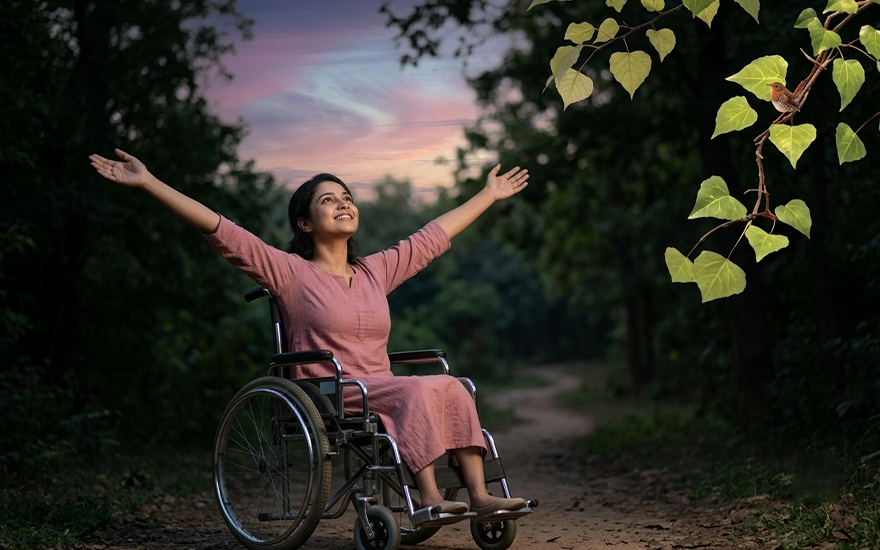
Beyond the curriculum, the physical environment of educational institutions across Odisha acts as a literal barrier to entry for students with locomotor disabilities. The built environment of most public colleges and universities in the state remains stubbornly inaccessible, directly violating the “Accessible India Campaign” (Sugamya Bharat Abhiyan) mandates.
For a physically challenged student using a wheelchair, crutches, or a walker, navigating a typical Odishan college campus is an exhaustive, dangerous exercise. The vast majority of older institutional buildings lack basic ramps at their entrances. Where ramps do exist, they are frequently poorly designed, constructed with excessively steep inclines, slick tiles, or lacking handrails, rendering them unsafe for independent use.
The crisis multiplies once a student manages to enter a building. Multi-storied academic blocks, libraries, and administrative departments are rarely equipped with functional lifts. Classrooms and laboratories are routinely assigned to upper floors without any consideration for the mobility needs of enrolled students. As a result, physically challenged students must frequently rely on the physical strength and goodwill of peers or family members to carry them up flights of stairs. This routine compromise of personal dignity and physical safety deters many bright students from attending regular lectures, leading to high absenteeism and, eventually, a high dropout rate.
Furthermore, the lack of accessibility extends to essential campus amenities. Accessible toilets are a rarity in Odisha’s educational institutions. Standard campus restrooms feature narrow doorways, lack grab bars, and cannot accommodate wheelchairs. The absence of these fundamental facilities forces students with physical disabilities to restrict their fluid intake or cut their campus hours short, directly impacting their physical health and academic focus.
The Interplay of Social and Economic Factors
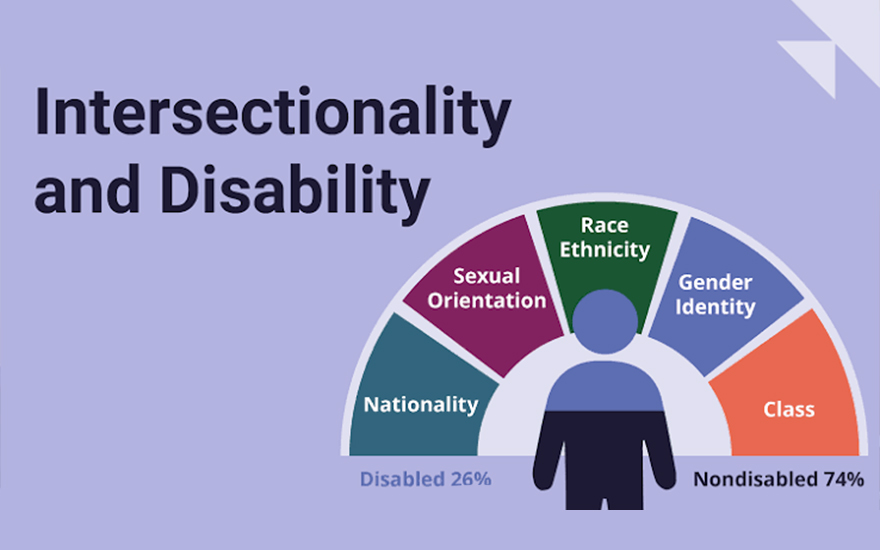
To fully understand the challenges of disability and education in Odisha, we have to view them through an intersectional lens. Odisha has a significant rural population, and a substantial portion of its tribal and marginalized communities live under constrained economic conditions. For a disabled student living in a rural district like Malkangiri, Nuapada, or Kalahandi, the hurdles are compounded exponentially.
Local village schools rarely have teachers trained in special education or inclusive pedagogy. When a student manages to overcome these early hurdles and qualifies for higher education, they must migrate to urban centers like Bhubaneswar, Cuttack, or Sambalpur, where the major universities are located. This migration introduces severe financial stress. Accessible housing or disabled-friendly hostel rooms are practically non-existent. Public transport in Odisha, while improving with initiatives like the ‘AMA Bus’ service in urban clusters, is still far from universally accessible for wheelchair users or the visually impaired. The cumulative cost of transport, specialized healthcare, and private learning aids often makes higher education an impossible dream for economically disadvantaged families with disabled children.
Policy Gaps and the Path Forward
The underlying issue in Odisha is not necessarily a lack of progressive legislation, but rather a profound gap in implementation, monitoring, and accountability. To bridge these divides and foster a genuinely inclusive educational ecosystem, the state must shift from a charity-based model of disability support to a rights-based framework.
- The Higher Education Department of Odisha must collaborate with state textbook bureaus and non-governmental organizations to systematically convert all standard college and university curricula into Braille, large print, and high-quality audio formats at the start of every academic year.
- Every university should maintain an active, registered pool of vetted scribes who are compensated fairly by the institution for their time. The responsibility of finding a writer must be legally transferred from the student to the institution’s examination cell.
- Organisations working on Disability issues should conduct rigorous accessibility audits of all educational institutions in Odisha. Funding allocations to colleges and universities must be made strictly conditional upon the implementation of universal design principles, including proper ramps, lifts, tactile paving, and accessible restrooms.
- Faculty and administrative staff require ongoing sensitization training to eliminate deep-rooted biases and understand the accommodations mandated by the RPWD Act 2016.
Education is the ultimate tool for self-reliance, yet for students with disabilities in Odisha, the current system demands an exhausting level of resilience just to access basic learning spaces. By failing to provide Braille books, reliable scribes, elevators, and functional ramps, institutions inadvertently signal that higher education is a privilege reserved only for the able-bodied. Odisha’s journey toward true development cannot be complete until its lecture halls, libraries, and examination halls are opened wide to every student, ensuring that physical or visual limitations no longer dictate intellectual boundaries.