I have always believed that education is much more than going to school, passing examinations or acquiring a degree. Education is about discovering who we are, understanding the world around us, developing the coincidence to participate in it and, most importantly, learning to live with one another with dignity and respect.
For a child with a disability, however, the journey to education is often a journey through barriers. The barrier may be a staircase, an inaccessible toilet, a textbook that cannot be read, a teacher who does not know how to communicate with the child, an examination system that refuses reasonable accommodation, or simply an attitude that assumes that the child cannot learn.
My own understanding of education has been shaped by both personal experience and decades of working with persons with disabilities. When I entered the disability movement, I encountered a world in which disability was largely seen through charity, welfare and sympathy. The question was often, “What can we do for this child?” I gradually learnt to ask a different question: “What must the system change so that this child can participate equally?”
That change in the question is at the heart of inclusive education.
India has moved a long way in recognizing education as a right. The Right to Education Act and the Rights of Persons with Disabilities Act, 2016 provide an important legal foundation. The RPwD Act recognizes inclusive education and places responsibilities on educational institutions to provide accessibility, reasonable accommodation, appropriate support and trained teachers. India’s commitment under the UN Convention on the Rights of Persons with Disabilities reinforces this rights-based approach. Yet my experience tells me that the distance between law and life remains considerable.
- A law can mandate a ramp. It cannot, by itself, make a teacher believe that a child who communicates differently belongs in the classroom.
- A circular can prescribe reasonable accommodation. It cannot automatically change the attitude of a school principal who believes that accommodating one child will inconvenience everyone else.
- A textbook can be converted into Braille or audio. But someone must Cirst recognize that the child needs it.
This is why I have come to believe that inclusive education is not merely an educational programme. It is a transformation of the education system itself.
At Swabhiman, we have tried to approach education from this larger perspective. Our work has never been limited to getting children into school. We have worked towards making it possible for children to remain in school, learn, participate, develop friendships, discover their abilities and eventually become independent citizens.
SAKSHAM emerged from this understanding. Our Field experience showed us that simply enrolling children with disabilities was not enough. Children needed support within the school and outside it. They needed special educators, therapy, assistive devices, accessible learning material, individualized educational planning and teachers who understood their needs. They needed parents who knew their rights. They needed schools that were willing to change. They needed government systems that could respond. In other words, the child did not need to be “Cixed”. The ecosystem around the child needed to become more responsive.
This is an important distinction.
Too often, we talk about children with disabilities in terms of their limitations. I would rather begin with their possibilities. Every child has something to contribute. Education must create the conditions in which that contribution can emerge. That is also why I have always believed that children without disabilities must be part of the inclusion process. Inclusion cannot be achieved by teaching children with disabilities separately and expecting society to become inclusive later. Children learn from one another. They learn friendship, cooperation, empathy and respect through everyday interaction.
This thinking gave birth to Anjali.
Anjali was conceived not simply as a festival for children with disabilities, but as a space where children with and without disabilities could learn, play, create and celebrate together. It was an experiment in joyful learning, but also an experiment in changing attitudes. When thousands of children spend time together, disability stops being an abstract concept. A child with a disability becomes a friend, a performer, an artist, a competitor, a storyteller, a teammate. The relationship changes the way difference is understood.
For me, that is education too. Education happens in a classroom, but it also happens in a playground, a festival, a conversation, a library, a bus, a neighborhood and a community.
Our Addhyayan programme reflects another dimension of this philosophy. Education should not end when a child completes school. Children and young people with disabilities need pathways to higher education, scholarships, skills, employment and independent living.
Supporting a student may mean providing books, transport or other educational expenses. It may mean producing accessible books or audio material. It may mean supporting a teacher. It may mean sending a special educator to a mainstream school. It may mean helping a young person discover a career.
The objective is not merely literacy. It is life.
The pandemic taught us this lesson painfully. When education moved online, many children with disabilities were suddenly excluded from the new classroom. Digital education was treated as automatically accessible, when it was anything but. Swabhiman’s surveys highlighted how inaccessible digital learning, inadequate devices, poor connectivity and lack of appropriate learning materials could push children with disabilities further away from education. I remember saying at the time that we could not allow a technological solution to become another form of exclusion.
Today, as technology enters every aspect of education, we must ask a simple question: technology for whom? An accessible digital classroom can open extraordinary possibilities. An inaccessible one can create an invisible wall.
The greatest challenge, however, remains attitudes.
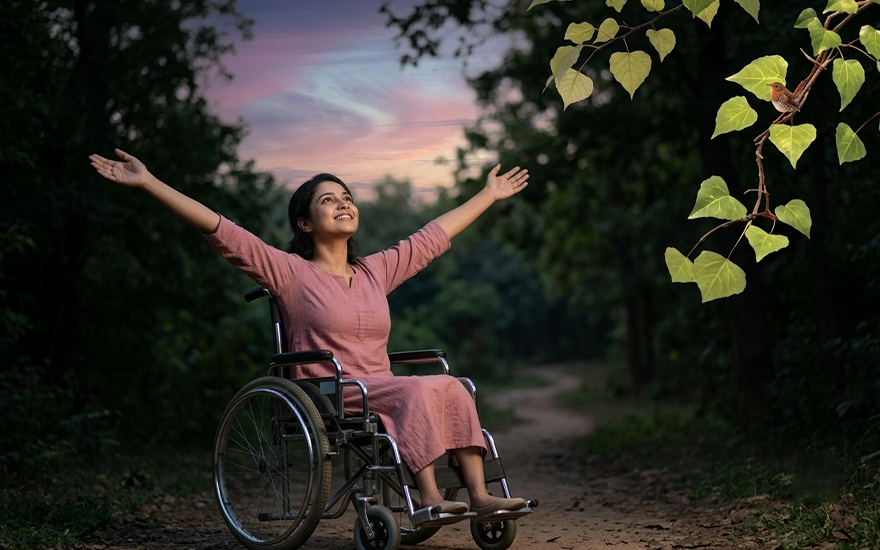
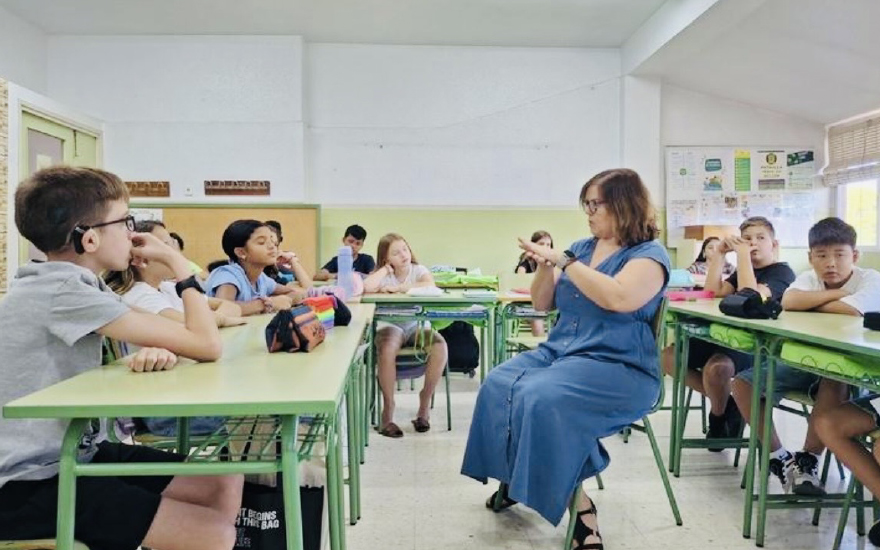
A child may have a wheelchair, but if the classroom is on the First Floor, there is no inclusion. A child may have hearing impairment, but if nobody knows sign language, there is no meaningful communication. A child with autism may be physically present in the classroom, but if the school interprets every difference in behavior as indiscipline, there is no belonging. A child with a learning disability may be intelligent and creative yet repeatedly experience failure because the examination system measures only one way of learning.
We therefore need to stop asking whether a child is “Cit” for the education system. We must ask whether the education system is prepared for the diversity of children. This requires investment in teachers. It requires accessible infrastructure. It requires alternative formats, assistive technology and reasonable accommodation. It requires monitoring and accountability. It requires parents to be partners. It requires children to participate in decisions concerning them. And it requires governments, schools and civil society to work together rather than operate in isolated compartments.
Most importantly, it requires us to move from sympathy to rights.
I often say that law cannot change hearts, attitudes and thoughts by itself. It can create an obligation, but inclusion must ultimately become part of our culture. The classroom is therefore one of the most important places in which we can build the India we want.
If children grow up believing that difference is something to fear, avoid or pity, we will reproduce exclusion in our workplaces, cities and institutions. But if children grow up believing that every person has a place, every person has abilities, and everyone has the right to participate, we begin to create a different society.
This is why education matters so deeply to me.
Inclusive education is not about giving a child with a disability a seat in an ordinary classroom.
- It is about ensuring that the child is welcomed, heard, supported, challenged, respected and able to dream.
- It is about changing the school, not changing the child.
And ultimately, it is about something even larger than education. It is about creating a society in which nobody has to ask for permission to belong.
Dr. Sruti Mohapatra
CEO, Swabhiman Inclusive Education Expert
sruti@swabhiman.org
sruti_m@hotmail.com