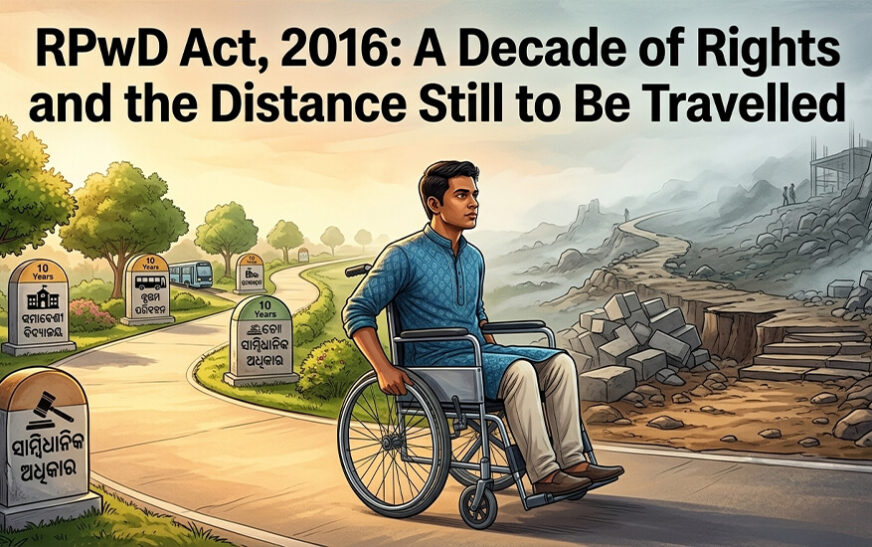
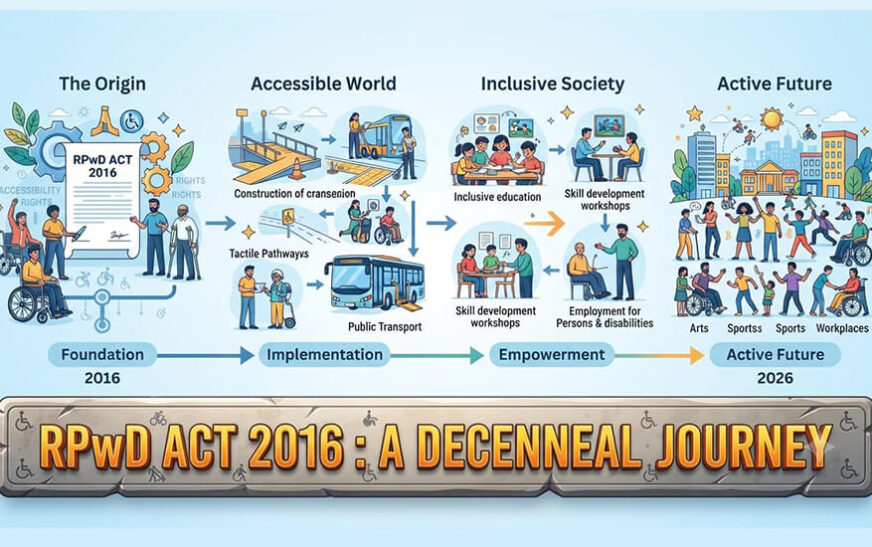
Nearly a decade after the Rights of Persons with Disabilities (RPwD) Act, 2016 came into force, it remains the most ambitious legislative intervention in India’s disability sector. By replacing the welfare-oriented Persons with Disabilities Act, 1995, it sought to recast disability not as an issue of charity or social protection, but as one of rights, equality and citizenship. Yet ten years later, while the Act has undoubtedly transformed the language of disability policy, its success in transforming lived realities remains far more contested.
The RPwD Act represented a significant conceptual leap. Aligned with the United Nations Convention on the Rights of Persons with Disabilities (UNCRPD), it expanded the number of recognized disabilities from seven to twenty-one and embraced a rights-based approach centred on equality, non-discrimination, accessibility and participation. More importantly, it shifted the discourse away from the medical model of disability towards the recognition that exclusion often results from barriers created by society itself.
On paper, the legislation is remarkably progressive. It provides for free education for children with benchmark disabilities, reserves five per cent seats in higher education and four per cent of government jobs for persons with benchmark disabilities, mandates reasonable accommodation, and prohibits discrimination across a range of sectors. It also established commissioners, advisory bodies and other institutional mechanisms intended to safeguard rights and ensure accountability.
There is little doubt that the Act has succeeded in changing the terms of the national conversation. Concepts such as accessibility, universal design, reasonable accommodation and inclusive development have moved from the margins of advocacy into mainstream policy discourse. Judicial interventions have further strengthened the law by repeatedly affirming that accessibility and accommodation are not matters of administrative discretion but integral components of substantive equality.
The past decade has also witnessed some measurable progress. Programmes such as the Unique Disability Identity (UDID) initiative have improved standardization in disability certification, while the Accessible India Campaign has helped keep accessibility on the public policy agenda. Educational institutions are increasingly providing examination accommodations, and disability inclusion has gained greater visibility within corporate diversity frameworks. Advances in assistive technology and digital accessibility have opened new possibilities in education, employment and independent living.
Yet these achievements need to be viewed with a degree of caution.
The primary challenge confronting the RPwD Act is not the adequacy of its provisions but the weakness of its implementation. In many respects, the Act’s first decade has exposed the persistent gap between legislative ambition and administrative delivery.
Accessibility illustrates this gap most clearly. Despite years of policy commitments, large sections of India’s physical and digital infrastructure remain inaccessible. Public buildings, public transport systems, educational institutions and government websites frequently fail to meet accessibility standards. Compliance often appears project-driven rather than systemic, and monitoring mechanisms remain weak. For many persons with disabilities, the barriers encountered in daily life remain largely unchanged despite the existence of legal safeguards.
A similar pattern is visible in education and employment. Reservations have undoubtedly expanded access, but access alone cannot be mistaken for inclusion. Admission to a school or university often does not guarantee accessible learning materials, trained faculty or adequate support services. Likewise, reserved jobs frequently remain vacant, and many workplaces continue to struggle with providing reasonable accommodation. The result is that the promise of participation frequently stops at the point of entry.
The uneven nature of implementation across states further complicates the picture. Administrative capacity, resource allocation and institutional commitment vary considerably, creating significant disparities in how rights are realized. While some urban centres have seen notable improvements, many persons with disabilities in rural and semi-urban areas continue to face difficulties in obtaining certification, accessing services or seeking redress for violations of their rights.
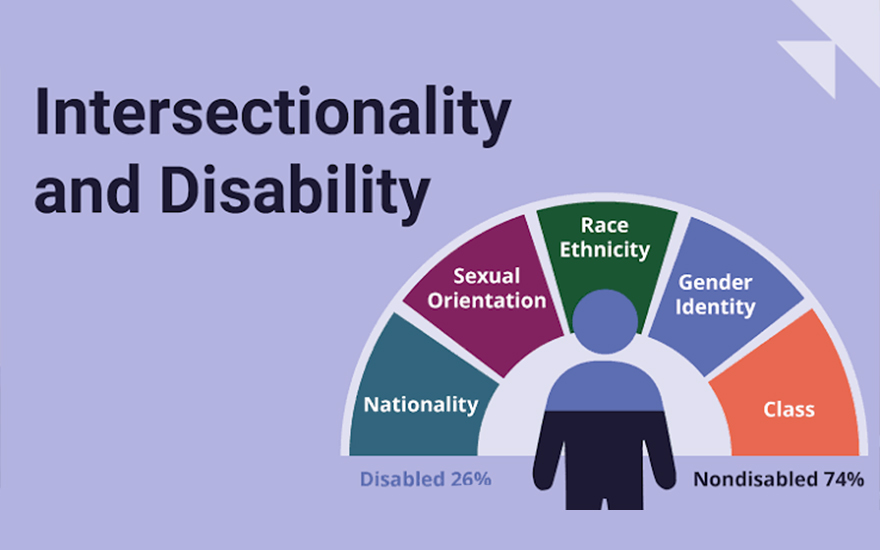
Another area of concern is the lack of reliable and comprehensive disability data. Without accurate information disaggregated by gender, geography, socio-economic status and type of disability, effective policymaking becomes difficult. The absence of robust data often means that planning remains reactive rather than evidence-based.
Equally significant is the limited participation of persons with disabilities in policy formulation and implementation. The principle of “Nothing About Us Without Us” is widely acknowledged in official discourse, yet decision-making processes continue to be dominated by administrators and experts rather than those with lived experience of disability. As a result, many policies continue to reflect institutional priorities more than user realities.
As the RPwD Act enters its second decade, the debate must move beyond celebrating the law’s progressive intent. The larger question is whether India possesses the administrative will, institutional capacity and political commitment required to translate rights into everyday realities.
The first decade has demonstrated that legal recognition, while necessary, is not sufficient. The second decade must focus on enforcement, accountability and measurable outcomes. The success of the RPwD Act ultimately will not be judged by the number of schemes launched, committees formed or policies announced. It will be judged by whether accessibility becomes routine rather than exceptional, whether inclusion becomes systemic rather than symbolic, and whether persons with disabilities can participate in society without constantly having to negotiate barriers.
The Act has won the battle for recognition. The struggle now is to ensure that recognition results in genuine equality. Unless implementation begins to match legislative intent, the RPwD Act risks being remembered less as a transformational instrument of change and more as a reminder of how far India still has to travel in fulfilling its promise of inclusion.